

Cart
0
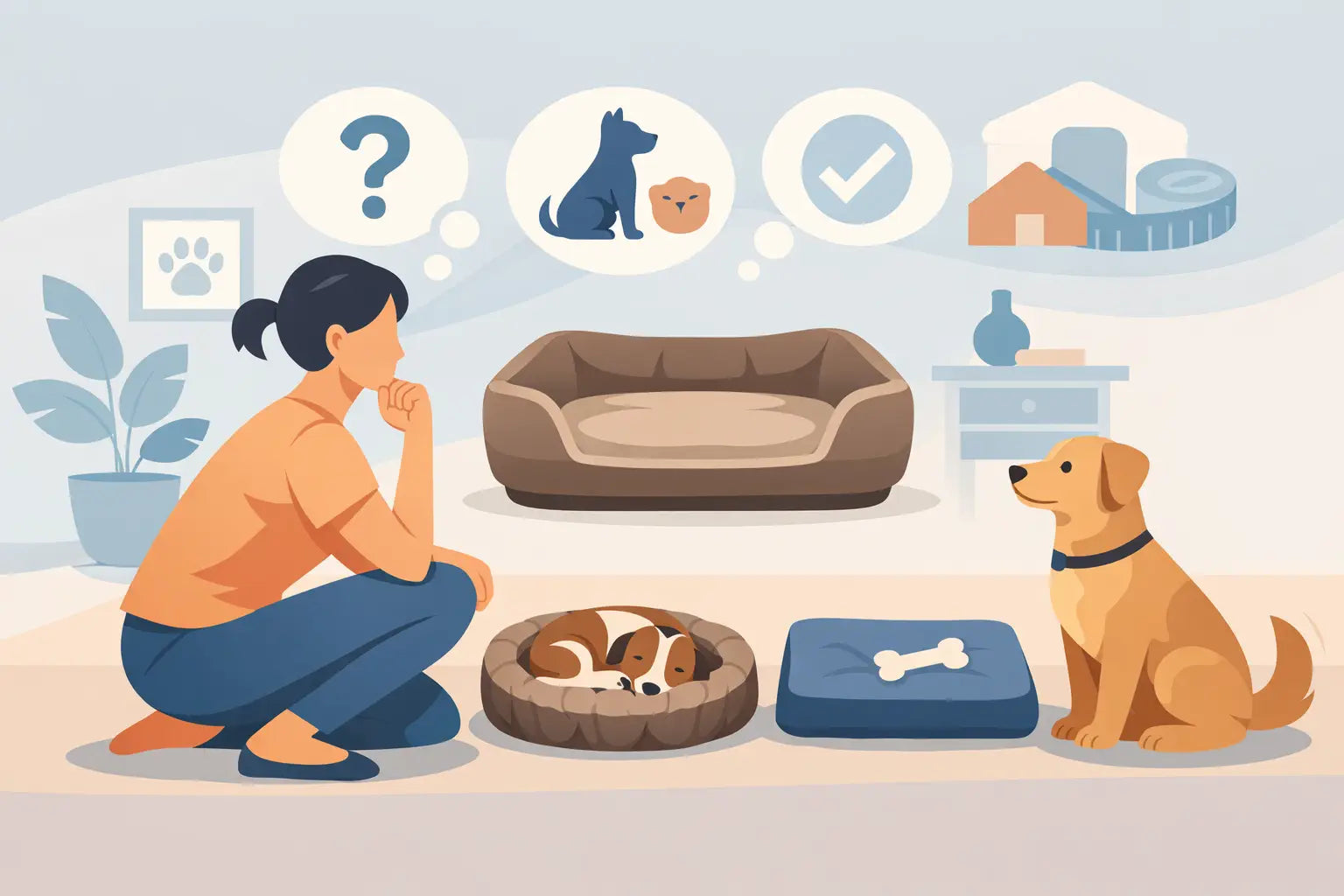
That tiny curl-up spot by the couch might look cute, but if your dog wakes up stiff, kicks all night, or keeps abandoning their bed for your rug, something is off. Knowing how to choose a dog bed can make a real difference in your pup’s comfort, sleep, and daily routine - and it can save you from buying a bed they ignore after two naps.
The right bed is not just about color or shape. It should match your dog’s size, sleeping style, age, coat, habits, and the way your home works. Some dogs want a plush little nest. Others stretch out like they own the whole living room. A good pick feels comfortable for them and practical for you.
How to choose a dog bed without overthinking it
Start with the dog, not the bed. It is easy to fall for a cute design or a good deal, but your dog’s sleeping habits tell you more than any product label ever will. Watch how they rest during the day and at night. Do they curl into a tight ball, sprawl on their side, lean against furniture, or burrow under blankets? Those patterns usually point you toward the best shape and support level.
Size comes first. A bed that is too small feels cramped, while one that is too big can leave smaller dogs feeling exposed instead of secure. Measure your dog from nose to tail base while they are lying down in their usual sleep position, then add a few inches for wiggle room. If your dog stretches out fully, lean toward a larger bed. If they curl up tightly, they may like a more compact, nest-like shape.
Then think about where the bed will live. A thick cushioned bed may be perfect in the bedroom, but less practical in a busy hallway or near a muddy back door. If the bed is going in a crate, your measurements need to match the crate interior, not just your dog’s length.
Match the bed to your dog’s sleep style
Dogs are a lot like people when they sleep - some want structure, some want softness, and some seem happiest anywhere they can flop. Sleep position is one of the simplest ways to narrow your options.
For dogs who curl up
Round or oval beds with raised edges tend to work well for dogs who like to curl into themselves. The higher sides can create a cozy, sheltered feeling that helps nervous or smaller dogs relax. These beds are especially popular with pups who like warmth and softness.
The trade-off is space. If your dog sometimes curls up but also stretches out during deeper sleep, a very snug bolstered bed may feel limiting.
For dogs who sprawl out
Flat mattresses, pads, and pillow-style beds give stretchers more room. Large breeds and long-bodied dogs often do better with this shape because nothing crowds their legs or shoulders. If your dog is always hanging halfway off their current bed, that is usually your clue.
These beds are simple and versatile, but they do not give much head or body support around the edges. Dogs that like to lean may miss that extra structure.
For dogs who lean or nest
Bolster beds offer the best of both worlds for many dogs. They provide an open center with padded sides for head support and a sense of security. Senior dogs, anxious dogs, and pups who like to rest their chin on everything often love this style.
Just make sure the sleeping area inside the bolsters is still roomy enough. Sometimes the outside dimensions look generous, but the actual usable space is much smaller.
Support matters more than many pet owners realize
A fluffy bed can look comfortable and still offer poor support. That matters most for larger dogs, older dogs, and pups with joint stiffness, arthritis, or mobility issues. If your dog struggles getting up, changes positions often, or seems sore after resting, cushioning alone may not be enough.
Consider orthopedic support
Foam beds, especially denser orthopedic styles, can help distribute weight more evenly and reduce pressure on hips, elbows, and shoulders. They are often a smart pick for seniors and big breeds, but younger active dogs can benefit too.
Not every thick bed is truly supportive, though. Some overstuffed beds flatten quickly and lose shape. A bed that starts out cloud-soft but compresses within weeks may not hold up for everyday use.
Think about getting in and out
Very high sides or extra-deep beds can be cozy, but they are not ideal for every dog. Puppies, seniors, and dogs with short legs may need lower entry points. Comfort includes accessibility.
If your dog likes to sleep but not struggle to get settled, a lower-profile bed with good support can be a better choice than a lofty one.
Fabric, fill, and cleanup all matter
Knowing how to choose a dog bed also means being honest about mess. Shedding, drool, muddy paws, accidents, and that mystery wet spot no one wants to investigate - real life should shape your decision.
Pick a cover that fits your home
Soft plush fabrics feel extra cozy, especially in colder months, but they can hold onto fur and odors more than smoother materials. Tightly woven fabrics are often easier to wipe down and vacuum. If your dog overheats easily, very fuzzy surfaces may not be their favorite anyway.
For dogs with allergies or sensitive skin, simple washable materials are usually the safest bet. Fancy trim and decorative details may look nice at first, but they can be harder to keep clean.
Washable is worth it
A removable, machine-washable cover makes life easier. If the whole bed is washable, even better. This is one of those features that seems optional until the first muddy afternoon or upset stomach.
Water-resistant liners or inner covers can also help the bed last longer. They are especially useful for puppies in training and senior dogs who may have accidents.
Durability depends on your dog
If your dog circles three times and gently lies down, you have options. If they scratch, dig, chew zippers, or drag their bed from room to room, you need tougher materials and sturdier construction. No bed is indestructible, but some are definitely better suited to enthusiastic users.
Age, breed, and coat can change what feels best
A one-size-fits-all approach rarely works with dog beds. Puppies, adult dogs, and seniors often need different things, and breed traits matter more than many shoppers expect.
Small dogs and short-haired breeds often love warmth. They may gravitate toward cuddler beds, faux-fur finishes, or beds with raised sides that hold in heat. Thick-coated dogs and breeds that run hot may prefer flatter beds with more airflow and less plush fabric.
Large and giant breeds need enough space, but they also need support that does not collapse under their weight. A bed that looks generously filled for a small dog may flatten quickly under a heavier one. If you have a breed prone to hip or joint issues, it makes sense to prioritize structure over extra fluff.
Puppies are a special case. They grow fast, have accidents, and sometimes treat beds like chew toys. You may not want to invest in the fanciest option right away. Start with something comfortable, washable, and appropriately sized for the near future rather than only for today.
Style is part of the decision too
Yes, your dog’s comfort comes first. But if the bed sits in your living room every day, you should like how it looks too. The best choice usually lands in that sweet spot between pet-friendly and home-friendly.
Neutral colors can hide wear and blend into your space. Patterns may disguise fur and small stains better than solid light colors. If you want one bed in the crate and another in the main living area, that can be a smart setup instead of expecting one bed to do everything.
At My Pet Your Pet Our Pet, that mix of comfort, variety, and everyday practicality is exactly what many pet families are looking for. A dog bed should feel like an easy yes for your pup and your home.
Common mistakes when choosing a dog bed
One of the biggest mistakes is buying based only on breed averages. Your Labrador may be smaller than typical, or your mixed breed may sleep like a tiny curled fox even though they are medium-sized. Always measure and observe your actual dog.
Another common miss is choosing a bed that looks plush but lacks structure. Soft is great, but support matters. Also, do not ignore maintenance. If you cannot easily wash the cover, the bed may become less appealing to both you and your dog pretty quickly.
Finally, avoid assuming your dog will adapt to any bed eventually. Sometimes they do. Sometimes they are telling you something useful by avoiding it. Dogs are pretty honest reviewers.
Choosing the right bed is really about paying attention to what helps your dog feel safe, supported, and fully at ease. When you get it right, you are not just adding another pet item to the house - you are giving your dog a place that feels like theirs, every single day.

