

Cart
0
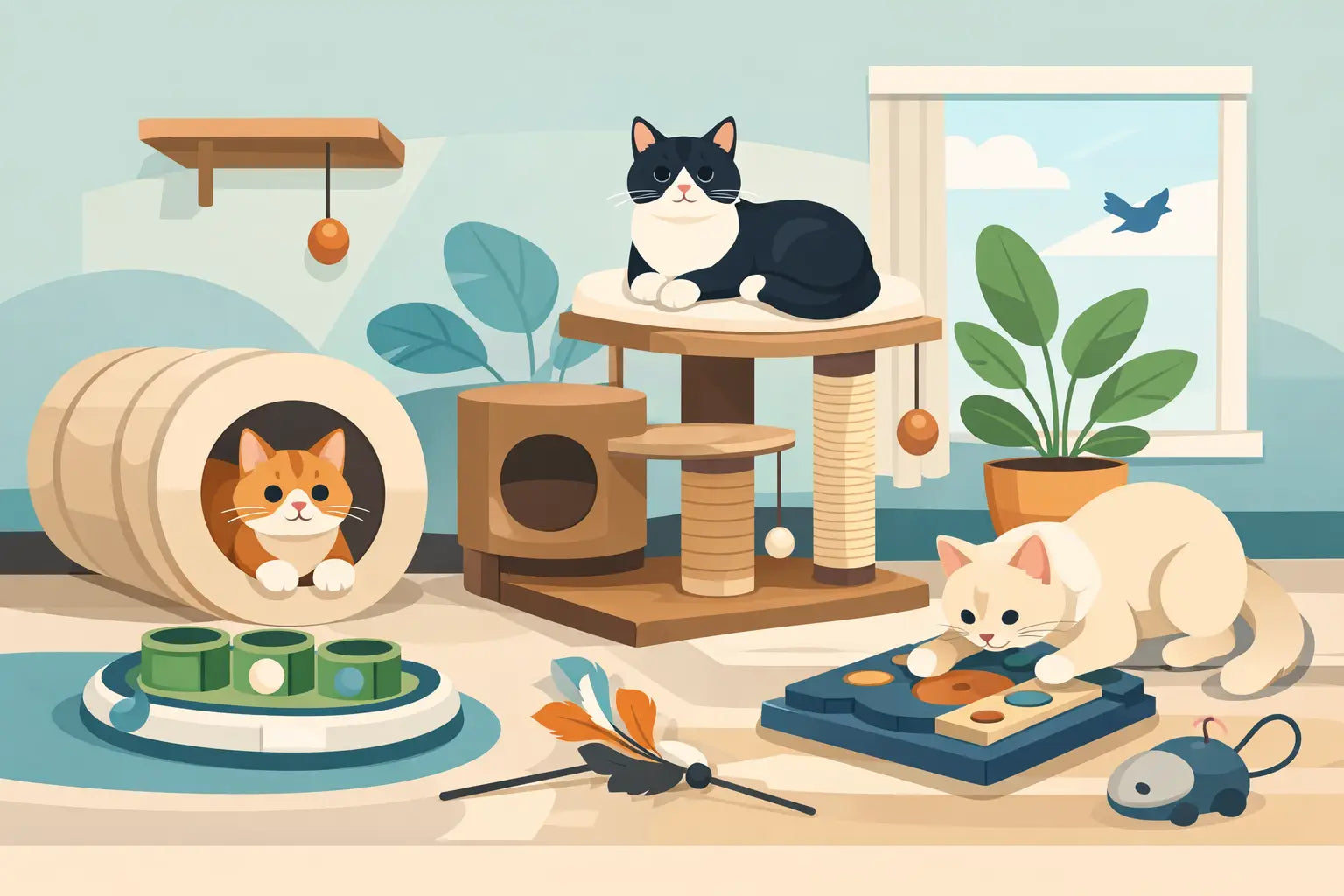
A cardboard box can become the most exciting thing in your home for an afternoon. That is the charm of indoor cat enrichment ideas: they do not have to be expensive or complicated to give your cat a happier, more interesting day. A few thoughtful changes can help turn everyday indoor time into chances to hunt, climb, scratch, explore, and relax.
Cats may live safely indoors, but their instincts still ask for a job to do. Without enough variety, some cats get bored, overeat, wake everyone up at night, or turn the sofa into a scratching project. The best approach is to rotate simple activities and pay attention to what makes your cat light up. Every cat is different, and yours, mine, and ours all deserve a home that feels made for them.
Indoor Cat Enrichment Ideas for Everyday Fun
1. Make play feel like a hunt
A wand toy with feathers, fabric strips, or a soft lure can bring out your cat's natural stalking instincts. Move it low and slowly at first, let it disappear behind a chair, then give your cat a chance to chase, pounce, and finally catch it. The catch matters. If the toy never gets caught, some cats lose interest or become frustrated.
Short sessions work beautifully. Try five to 10 minutes before breakfast or dinner, then offer a small meal afterward. That follow-up mimics the natural hunt-eat-rest rhythm and can be especially helpful for cats who get energetic just as you are winding down.
2. Rotate toys instead of leaving everything out
A floor covered in toys does not always equal more fun. When the same toys stay out for weeks, many cats stop noticing them. Keep a small selection available, then swap in different toys every few days.
Mix textures and movement: crinkle balls, soft plush toys, kickers, tunnels, and lightweight toys that slide across the floor. A cat who ignores a noisy ball may adore a quiet fabric mouse. Rotation keeps familiar toys feeling fresh without requiring a constant stream of new things.
3. Create vertical space to explore
Cats often feel more secure when they can observe a room from above. A sturdy cat tree, window perch, shelf designed for cats, or even a cleared-off spot on a stable bookcase can give your cat a special lookout point.
Choose the location with your cat's personality in mind. Social cats may want a perch near the family room. Shy cats may prefer a quiet corner where they can watch without being approached. If you have more than one cat, offering several elevated resting spots can reduce competition over the best seat in the house.
4. Turn a window into kitty TV
A safe window view offers movement, sunlight, and a little daily drama. Birds, squirrels, leaves, and passing neighbors can hold a cat's attention far longer than we might expect. Add a comfortable window bed or perch so your cat can settle in without balancing on a narrow sill.
Safety comes first. Make sure screens are secure and windows cannot open wide enough for a cat to slip out. If the view is very busy and seems to make your cat anxious, move the perch to a calmer window or limit access during the most exciting times of day.
5. Let your cat work for treats
Food puzzles are a simple way to add purpose to snack time. Instead of placing every treat in a bowl, use a puzzle feeder, treat ball, or slow feeder that encourages your cat to paw, roll, sniff, and problem-solve.
Start easy. A puzzle that is too difficult can send a hungry cat walking away in a huff. Once your cat understands the game, gradually make it more challenging. Use a few pieces of regular kibble if treats add too many calories to your cat's daily routine.
6. Build a box fort or paper-bag hideaway
Cats do not need a fancy setup to feel delighted. A clean cardboard box with two entrance holes can become a hideout, ambush spot, and nap zone. A paper bag with the handles removed is another low-cost favorite.
Change the arrangement occasionally. Place two boxes together to make a little tunnel, toss in a soft blanket, or hide a toy inside. Always avoid plastic bags, loose strings, staples, tape, and anything your cat could chew or swallow.
7. Offer scratching choices in the right places
Scratching is not bad behavior. It helps cats stretch, maintain their claws, and leave scent signals that make a space feel like home. The goal is to make the right scratching surface easier and more appealing than your furniture.
Many cats enjoy both vertical and horizontal scratchers, so offer a mix if you can. Place one near where your cat sleeps, another near a favorite lounging area, and one close to furniture they already scratch. A sturdy scratching post should not wobble when your cat leans into it.
8. Add cozy hideouts for quiet time
Enrichment is not always active. A covered bed, tunnel, cat cave, or open carrier with a soft cushion gives your cat a place to retreat when the house feels busy. This can be especially valuable in homes with children, dogs, guests, or multiple cats.
Keep hideaways available rather than pulling your cat out to socialize. Cats build confidence when they know they can choose their own space. A quiet nap spot near the action and another in a low-traffic room gives them options.
9. Try cat-safe scent enrichment
For some cats, catnip, silvervine, or valerian can turn an ordinary toy into a major event. Sprinkle a small amount on a scratcher, place it in a refillable toy, or offer a catnip-filled kicker for supervised play.
Not every cat responds to catnip, and that is completely normal. Kittens often show little interest, while other cats may respond more strongly to silvervine. Keep sessions short and put the item away afterward so the scent stays special. Never use essential oils as cat enrichment, since many can be unsafe for cats.
10. Teach simple games with positive rewards
Cats can learn more than many people realize. Try teaching your cat to touch a target, come when called, step onto a mat, or enter a carrier willingly. Use tiny rewards and keep your tone cheerful.
Training gives confident cats a fun mental challenge, while timid cats may enjoy the predictability of earning a reward at their own pace. End before your cat gets tired or distracted. Two successful minutes are better than a 15-minute session that feels like homework.
11. Set up a safe solo-play station
Independent play is useful when you are working, cooking, or simply need a moment to yourself. A stable tunnel, a few lightweight toys, a ball track, and a scratcher can create a little activity zone your cat can visit throughout the day.
Avoid leaving out toys with long strings, loose feathers, small pieces, or anything that could be swallowed when no one is watching. Interactive toys are wonderful, but they should match your cat's play style and be checked regularly for wear.
12. Refresh the routine, not just the room
The biggest difference often comes from small changes repeated over time. Move a perch to a new window, switch out a toy, add a puzzle feeder once or twice a week, or create a short evening play ritual. Your cat does not need constant stimulation. They need regular opportunities to make choices, use their instincts, and feel secure.
How Much Enrichment Does an Indoor Cat Need?
It depends on age, energy level, health, and personality. A playful young cat may enjoy several short play sessions each day, while a senior cat may prefer gentle movement, a warm bed, and an easy food puzzle. Cats recovering from illness or living with mobility issues need options that are comfortable and accessible, so speak with your veterinarian if you are unsure what activity level is appropriate.
Watch your cat for clues. A content cat may stretch out near you, groom normally, use the litter box consistently, and show interest in play without seeming frantic. Repeated nighttime yowling, destructive scratching, overgrooming, or sudden behavior changes can have many causes, including stress or medical concerns. Enrichment can help with boredom, but it is not a substitute for veterinary care.
You do not need to redesign your whole home by Friday. Start with one cozy hideout, one reliable scratching surface, and one daily play ritual. Then let your cat tell you what belongs in their perfect little kingdom. At My Pet Your Pet Our Pet, we believe the best pet spaces are built with love, curiosity, and room for every whisker-filled personality.

