

Cart
0
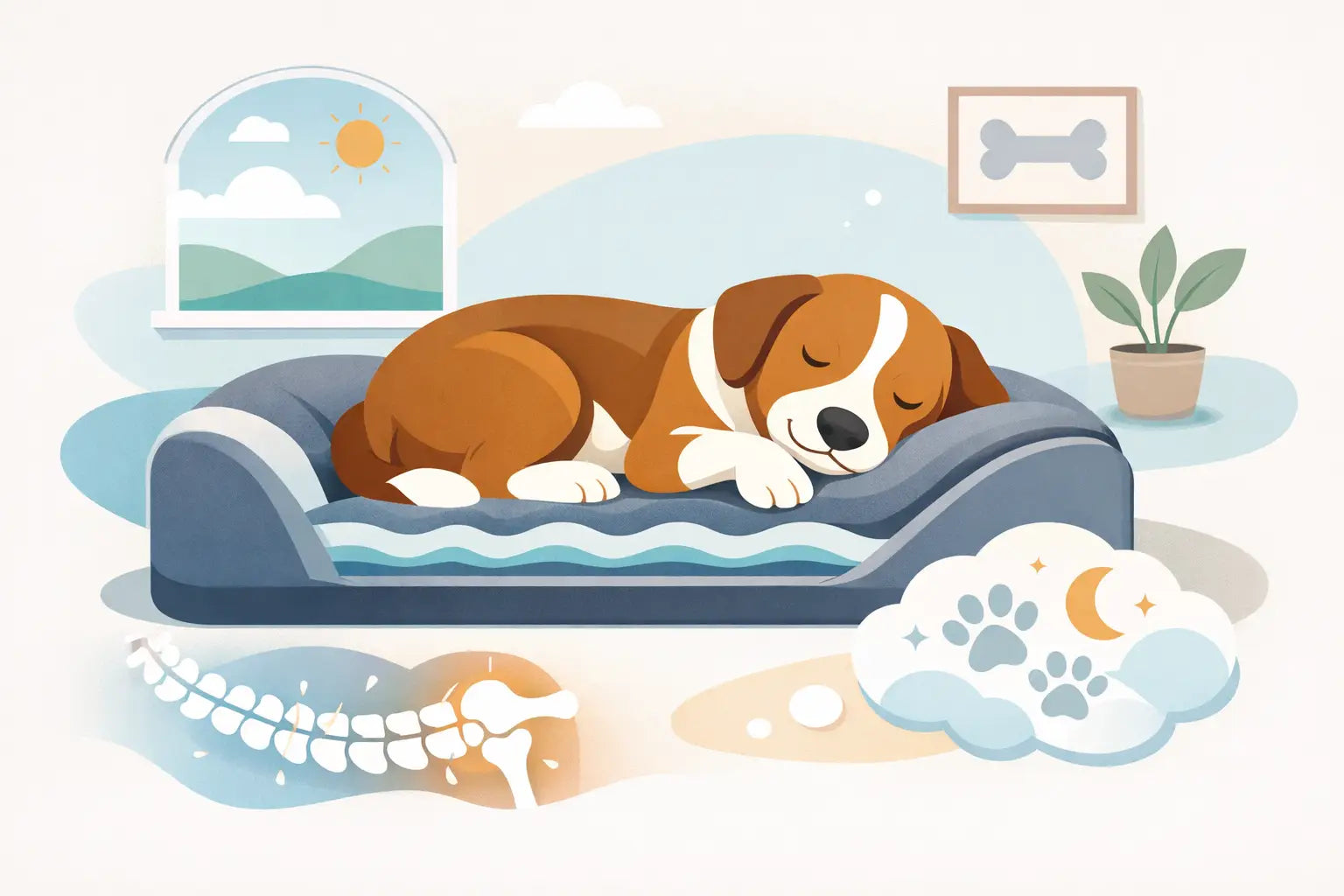
That stiff little stretch after a nap, the careful step down from the couch, the way your dog circles three times before finally settling - those small moments can make a comfortable bed feel like a very big deal. Orthopedic dog beds give dogs a supportive, cozy place to rest, whether they are energetic puppies, active adults, or sweet seniors who deserve a little extra care.
At My Pet Your Pet Our Pet, we believe every pet deserves a space that feels like theirs: soft, secure, and ready for a well-earned nap. The right bed will not solve every mobility concern, but it can make everyday rest more comfortable and help your dog feel supported from morning snoozes to bedtime.
What Makes Orthopedic Dog Beds Different?
An orthopedic bed is designed to distribute your dog's weight more evenly than a thin, flat cushion. Most use dense foam, often memory foam or supportive egg-crate foam, to cushion pressure points such as hips, shoulders, elbows, and knees. Rather than letting a dog's body sink straight through to the floor, the bed should hold its shape and offer gentle support.
That difference matters most for larger dogs, older dogs, and dogs who have trouble getting comfortable. A plush bed can look inviting, but if the filling quickly flattens, it may not provide much relief after a few weeks of daily use. Orthopedic foam is meant to stay supportive longer.
Still, “orthopedic” is not a single standardized material or medical guarantee. Foam thickness, density, cover quality, and bed shape all affect how a bed performs. Think of the label as a helpful starting point, then look closely at the features that fit your dog.
Who Can Benefit From an Orthopedic Bed?
Senior dogs are the obvious candidates, especially if they move more slowly after resting or seem reluctant to lie on hard floors. Dogs with arthritis, joint stiffness, hip discomfort, or previous injuries may also appreciate a more cushioned surface. If your dog has a diagnosed health condition, your veterinarian can help you choose comfort options that make sense alongside their care plan.
But orthopedic dog beds are not only for older pets. Large and giant breeds carry more weight on their joints, so a supportive sleeping surface can be a smart everyday choice. Deep-chested breeds, lean dogs with prominent elbows, and highly active dogs that spend their days running, hiking, or playing hard can benefit from a bed that lets them fully relax afterward.
Even a healthy young dog may simply sleep better on a quality foam bed. Comfort is not reserved for pets with a problem. It is part of the daily love we give them.
Choose the Right Size Before Anything Else
A bed that is too small can make the best foam feel less comfortable. Measure your dog while they are fully stretched out, then add a few inches so they can change positions without hanging off the edge. If your dog curls up tightly, a smaller nest-style bed may feel safe and cozy. If they sprawl like they own the whole living room, choose a larger rectangular mattress-style bed.
Weight limits matter, too. A thick bed for a 15-pound terrier may not hold up the same way under an 85-pound Labrador. Larger dogs usually need thicker, denser foam to avoid bottoming out. As a general shopping rule, the heavier your dog, the more important it is to look for substantial padding and a strong, durable base.
Consider where the bed will live. A slim mat can work nicely in a crate, beside your desk, or in the back seat for travel. A thicker lounger may be better for a favorite corner of the family room. If your dog sleeps in your bedroom at night and follows you around all day, having more than one supportive resting spot can be a practical kindness.
A quick fit check
Once the bed arrives, watch how your dog uses it. They should be able to lie down, turn around, and stretch without looking cramped. If they regularly choose the floor next to the bed, check whether the bed is too warm, too small, unstable on the floor, or simply placed away from the action.
Foam, Bolsters, and Other Features That Matter
Memory foam molds gently to the body and can feel especially comfortable for dogs who need pressure relief. High-density support foam tends to be firmer and more structured, which is often useful for heavier dogs. Egg-crate foam has a textured surface that adds cushioning and airflow, though it may not be as supportive as a thick solid-foam insert for every dog.
A bed with raised bolsters gives dogs a place to rest their head and can create a den-like feel. Many dogs love that sense of enclosure. However, a fully bolstered bed may be less convenient for a pet that has trouble stepping over edges. For those dogs, look for a low front entry or an open mattress design that makes getting in and out easier.
Non-slip bottoms are a small feature with a big payoff, particularly on hardwood, tile, or laminate floors. A bed that slides away as your dog steps onto it can be frustrating and unsettling. Water-resistant liners are also helpful for puppies, older pets, and any household managing occasional accidents.
The cover deserves attention, too. Removable, machine-washable covers make regular cleanup far easier. A soft sleep surface feels wonderful, but a durable fabric on the outside can better handle daily nesting, shedding, and the occasional enthusiastic scratch before nap time.
Match the Bed to Your Dog's Sleep Style
Dogs are wonderfully particular about where and how they sleep. Choosing based on their habits can make your purchase feel much more personal.
A curled-up sleeper may love a round bed with supportive sides. A dog who stretches flat on their side or belly often prefers a wide, open orthopedic mattress. Head-resting dogs may enjoy a lounger with a bolster along one or two edges. Dogs that get warm easily can be more comfortable on a flatter bed with breathable fabric instead of a deeply plush, heat-trapping surface.
For dogs who like a crate, an orthopedic crate pad can add much-needed comfort without taking away their familiar safe space. Measure the crate's interior rather than guessing from its outside dimensions. The pad should lie flat and leave enough room for your dog to stand and turn comfortably.
How to Tell When It Is Time to Replace a Dog Bed
Dog beds work hard. Over time, even a favorite bed can lose the support that made it comfortable in the first place. Press down in the center and along the areas where your dog sleeps most. If you can easily feel the floor, the foam stays compressed after you lift your hand, or the insert has obvious lumps, it may be time for an upgrade.
Other signs include torn covers, persistent odors after washing, loose stuffing, or a bed that slides around too easily. If your dog suddenly avoids a bed they once loved, pay attention. The reason could be as simple as a flattened cushion, but ongoing changes in sleep, movement, appetite, or behavior are worth discussing with a veterinarian.
Make the New Bed a Favorite Spot
Some dogs claim a new bed instantly. Others need a little encouragement, especially if they are attached to an old blanket or a familiar spot on the sofa. Put the bed where your dog already chooses to rest, not in an isolated corner they rarely visit. Add a clean blanket that smells like home, and offer calm praise when they settle on it.
Avoid forcing your dog onto the bed or using it as a place to send them when they are in trouble. Their bed should feel like a happy retreat. A favorite toy or a quiet chew can help create that positive association, as long as it is safe for unsupervised use in your household.
Care That Keeps Comfort Going
Wash removable covers according to their care labels, and vacuum the bed regularly to remove fur, crumbs, and dust. If the foam insert is not machine washable, spot-clean it gently and allow it to dry completely before replacing the cover. Damp foam can hold odors and may lose its shape over time.
Rotate the bed every few weeks if your dog always sleeps in the same position. This can help the foam wear more evenly. Keeping nails trimmed also protects fabric covers and gives your dog better traction as they step onto the bed.
The best orthopedic bed is not necessarily the thickest, softest, or most expensive option. It is the one that suits your dog's size, sleeping style, mobility, and favorite place to nap. Give them a supportive spot made with comfort in mind, then enjoy the sweetest proof that you chose well: a relaxed sigh, a tucked paw, and a pet who looks completely at home.

