

Cart
0
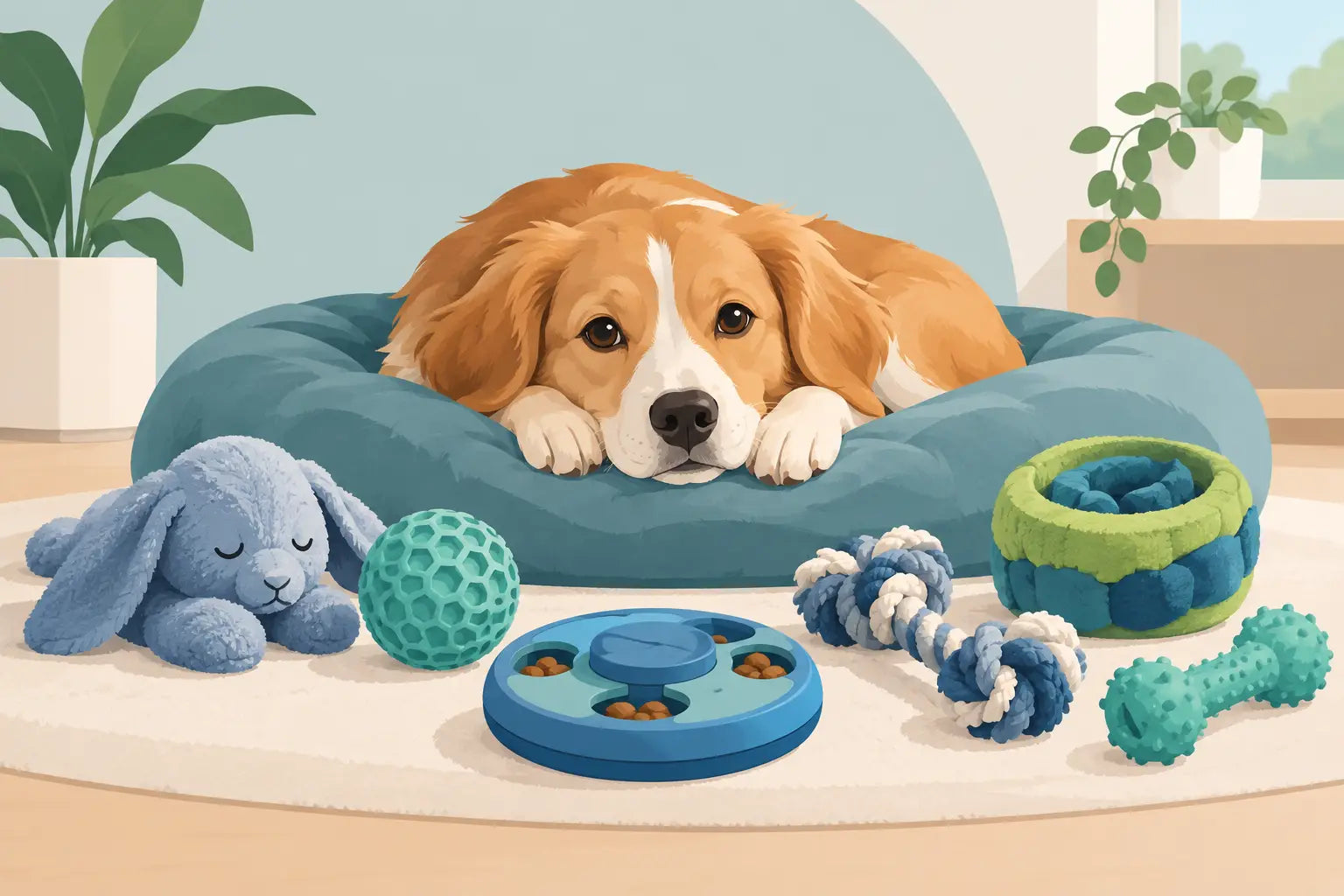
A dog who paces when the doorbell rings, shadows you room to room, or turns a quiet afternoon into a chewing mission is not being difficult. They may be looking for a safe way to settle their body and focus their mind. The best toys for anxious dogs give that nervous energy somewhere constructive to go, whether that means licking, sniffing, chewing, or working through a simple puzzle.
A favorite toy will not erase separation anxiety, fear of visitors, or distress caused by loud noises. But the right kind of play can make everyday moments feel more predictable and comforting. For your pet, a familiar toy can become part of a reassuring routine: you leave, they get a stuffed feeder; a storm begins, they get a long-lasting chew; guests arrive, they head to their cozy spot with a sniffing toy.
What Makes a Toy Calming for an Anxious Dog?
Calming toys usually encourage a natural behavior that takes time and concentration. Licking can be soothing, chewing gives the jaw something appropriate to do, sniffing engages a dog's powerful sense of smell, and problem-solving redirects attention away from a trigger. The best choice depends on what your dog already enjoys and what they can use safely.
A high-energy dog may need an interactive toy that creates a longer activity. A timid dog may prefer a soft comfort toy they can carry to bed. For a determined chewer, durability matters more than a clever design. Start with your dog's habits, not just the cutest item on the shelf.
1. Stuffable Rubber Chew Toys
A sturdy rubber toy with a hollow center is one of the most useful options for worried dogs. Fill it with a portion of your dog's regular food, soft dog-safe treats, or a little plain canned food, then offer it during a stressful event. Freezing the filled toy can make the activity last longer.
This is especially helpful for dogs who become unsettled when people leave the house. Give it a few minutes before you go, so your dog begins associating your departure routine with something pleasant. Choose a size that cannot be swallowed and a rubber firmness suited to your dog's chewing strength.
2. Lick Mats
Lick mats turn a small amount of spreadable food into a focused, slow activity. Their textured surface encourages repeated licking, which can help a dog pause and settle. A thin layer is plenty, so this can be an affordable everyday comfort tool rather than a high-calorie treat habit.
Use dog-safe options such as plain pumpkin puree, unsweetened yogurt if your dog tolerates dairy, or wet dog food. Always check ingredients and avoid foods containing xylitol, grapes, raisins, chocolate, onions, or garlic. Supervise at first, especially if your dog likes to chew silicone.
3. Snuffle Mats
For many dogs, sniffing is pure joy. A snuffle mat hides kibble or tiny treats among soft fabric strips, inviting your dog to search with their nose. It offers a gentle outlet for dogs that need to slow down without being challenged by a difficult puzzle.
Snuffle mats work well before a busy household moment, after a walk, or during a calm evening indoors. Keep sessions short if your dog is new to food puzzles. Once the food is gone, pick up the mat if your dog starts pulling at or swallowing the fabric.
4. Treat-Dispensing Balls
Treat-dispensing balls add movement to the mental work. As your dog nudges or rolls the toy, kibble falls out gradually. That combination can be a good match for dogs that feel restless and need a little physical activity along with food enrichment.
Adjustable openings are especially handy because you can make the game easier at first. A puzzle that is too frustrating may add stress instead of easing it. Let your dog experience a few easy wins, then increase the challenge as their confidence grows.
5. Beginner Puzzle Toys
A beginner puzzle toy may have sliding covers, flip lids, or simple compartments that reveal treats. These toys give bright, food-motivated dogs a job to do when the house is quiet or the weather keeps everyone inside.
Look for puzzles with wide, easy-to-move parts if your dog is just learning. The goal is calm engagement, not an escape-room test. Supervise puzzle time and remove any toy with loose pieces, cracks, or damaged plastic.
6. Durable Chew Toys
Chewing is a normal way for dogs to release tension, explore, and self-soothe. A durable chew toy can redirect a dog from shoes, furniture, or crate bedding while satisfying that urge in a safer way. Textured surfaces may also make chewing more interesting without requiring added treats.
No chew toy is truly indestructible. Pick a toy designed for your dog's size and chew style, inspect it often, and replace it when pieces begin to break away. Very hard items can damage teeth, so avoid anything that feels rock-hard or cannot flex slightly under pressure.
7. Soft Comfort Toys
Some anxious dogs are less interested in treats and more interested in companionship. A soft plush toy can offer a familiar item to carry, lean against, or bring to a favorite resting spot. For puppies adjusting to a new home, a comforting plush may be part of a peaceful bedtime routine.
Choose a toy without easy-to-remove eyes, ribbons, or stuffing if your dog tends to dissect plush items. A washable option is practical, too. Familiar scent matters to dogs, and a clean-but-recognizable comfort toy can be reassuring after a trip, move, or boarding stay.
8. Squeaky Toys for Interactive Play
Not every anxious dog needs quiet solo enrichment. Some need a cheerful, structured play break with their favorite person. A squeaky toy can make a short game of fetch, hide-and-seek, or gentle tug more engaging, helping your dog burn off tension while reconnecting with you.
Keep the excitement level in mind. If squeaking makes your dog frantic, switch to a quieter toy. The best play session leaves your dog pleasantly tired, not more wound up than when they started.
9. Tug Toys for Confidence Building
A simple rope or fleece tug toy can be a wonderful confidence builder when used with clear, gentle rules. Let your dog win sometimes, pause often, and trade the toy for a treat at the end. This teaches that giving up an exciting item does not mean fun disappears.
Tug is not right for every dog or every situation. Avoid it if your dog becomes overstimulated, guards toys, or has dental or neck concerns. For dogs who enjoy it calmly, a few minutes of connection can be more comforting than a toy left on the floor.
10. Slow Feeder Toys and Bowls
Dogs that rush through meals may benefit from a slow feeder toy or bowl. Spreading out mealtime adds mental work and can create a steadier rhythm in the day. It is an easy way to add enrichment without giving extra treats.
Choose a pattern that fits your dog's muzzle and patience level. A shallow design is often easier for flat-faced breeds, while an energetic food seeker may enjoy deeper grooves. Wash it after each use, since food residue can collect in small spaces.
How to Choose the Best Toys for Anxious Dogs
Start with one or two toy styles rather than filling the toy basket all at once. Notice what changes after use. Does your dog settle on their bed? Do they stay calmly engaged? Or do they become frustrated, possessive, or start tearing pieces off? Their behavior will tell you far more than a package label.
Rotate toys every few days to keep them interesting, but leave one familiar favorite available for comfort. It also helps to use special toys only during specific moments, such as crate time, thunderstorms, grooming, or departures. Over time, that toy can signal that a manageable, rewarding routine is beginning.
For every pet, safety comes first. Match toys to your dog's size, age, jaw strength, and play style. Supervise new toys, especially anything plush, edible, or made with removable parts. If your dog has swallowed objects before, ask your veterinarian for guidance before offering complex toys or chews.
When a Toy Is Not Enough
Toys are supportive tools, not a replacement for care when anxiety is severe. Contact a veterinarian or qualified behavior professional if your dog panics when left alone, injures themselves, destroys doors or crates, refuses food during stressful events, or cannot settle for long periods. Medical issues, pain, and sensory changes can sometimes look like anxiety.
Pair the right toy with a comfortable bed, steady exercise, patient training, and predictable daily routines. At My Pet Your Pet Our Pet, we believe happy pets are cared for in the little moments, too. A stuffed toy before you grab your keys or a sniffing game after a noisy afternoon can be one small way to tell your dog: you are safe, loved, and never facing the day alone.

