

Cart
0
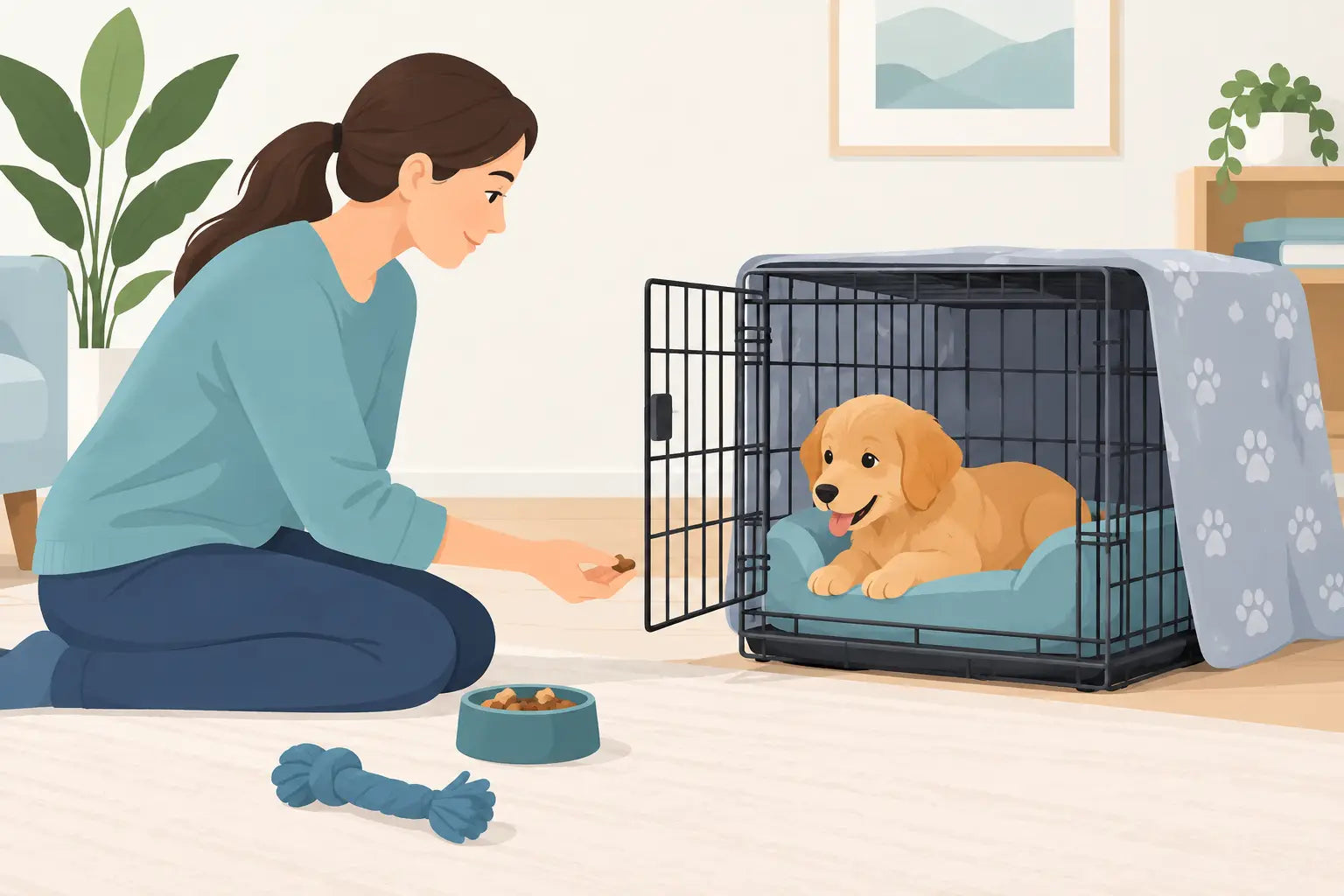
That tiny puppy whine at bedtime can tug at every heartstring in the house. But learning how to crate train a puppy does not mean ignoring your new best friend or forcing them into a scary space. Done patiently, crate training gives your puppy a cozy place to rest, helps with house-training, and makes everyday life safer and calmer for everyone.
The goal is simple: your puppy should see their crate as a happy little bedroom, not a punishment. A few treats, a comfortable routine, and realistic expectations go a long way. Every pup learns at a different pace, so celebrate the small wins - even if today’s win is simply putting one paw inside.
Start With the Right Crate Setup
A crate should be large enough for your puppy to stand up, turn around, and lie down comfortably. It should not be so roomy that they can sleep in one corner and use the other as a bathroom. If you have a growing puppy, choose an appropriately sized crate with a divider so you can expand their space as they grow.
Place the crate in a part of the home where your family spends time during the day. Puppies are social, and being near their people helps the crate feel less isolating. At night, many families begin with the crate beside the bed so they can hear whether their puppy needs a quick potty break or simply needs reassurance.
Make the space inviting with a fitted crate mat or soft bedding, as long as your puppy is not chewing or swallowing fabric. Add one safe chew toy or puppy-friendly comfort item. Keep the setup simple at first. Too many loose items can be distracting, create a chewing risk, or make cleanup harder after an accident.
Before bringing your puppy home, it also helps to have a few everyday essentials ready: a properly sized crate, a washable bed or mat, safe chew toys, food and water bowls, a leash, and cleaning supplies for the occasional accident. Comfort and consistency matter more than fancy extras.
How to Crate Train a Puppy Step by Step
Start with the crate door open. Toss a treat just inside and let your puppy decide whether to go in. Use a cheerful phrase such as “crate time” or “bedtime,” but do not push, pull, or place your puppy inside against their will. If they only reach in to grab the treat and back away, that still counts as progress.
Repeat this several times throughout the day. You can feed meals near the crate at first, then gradually move the food bowl just inside the entrance. Once your puppy walks in comfortably, place the bowl farther back. Meals create a positive association because the crate begins to predict something wonderful.
When your puppy is happily eating or chewing a special treat in the crate, close the door for a few seconds. Stay nearby. Open the door before they become upset, then offer calm praise. Over several sessions, slowly extend the time with the door closed. Think minutes, not hours.
Your puppy may fuss a little as they adjust. Pause before responding to a brief whimper, since opening the door immediately can teach them that crying is the fastest way out. However, do not let a puppy panic or cry intensely for long stretches. A distressed puppy may need a potty break, a slower training pace, or more help feeling secure.
As your puppy settles, practice short crate sessions while you move around the room, then step away for a minute or two. Build up gradually. The crate should become part of normal life, not something that only appears when everyone leaves the house.
Create a Routine Your Puppy Can Understand
Puppies thrive on predictable patterns. Take your puppy outside to potty right before crate time, especially after eating, drinking, playing, waking up, or an exciting visit with the family. When they go in the right place, offer immediate praise and a small reward. Then guide them into the crate with a calm, positive cue.
Young puppies cannot hold their bladder for very long. Age, breed, activity level, health, and how much they drank all make a difference, but a very young pup may need overnight breaks and frequent daytime trips outside. Expecting too much too soon sets both of you up for frustration.
For daytime crate training, begin with short sessions when your puppy is naturally ready to rest. A little play, a potty break, and a quiet chew can make settling much easier. Avoid using the crate for long daytime stretches simply because it is convenient. Puppies need movement, connection, training, and supervised play to grow into happy, well-adjusted dogs.
A sample rhythm might include a morning potty trip, breakfast, brief crate rest while you shower or work nearby, then another potty break and playtime. The exact schedule will depend on your household, but consistency helps your puppy understand what comes next.
Make Bedtime Feel Safe, Not Lonely
The first few nights can be the hardest. Your puppy has left their littermates, their familiar smells, and everything they knew. Keeping the crate close to you can make a big difference. Speak softly if they stir, and take them out quietly if it is time for a bathroom break.
Keep overnight potty trips boring. Carry or lead your puppy outside, give them a few minutes to go, praise them gently, and return them to the crate. Skip playtime, bright lights, and long cuddles at 2 a.m. You are teaching a clear message: nighttime is for sleeping.
Some puppies settle faster with a cover over part of the crate, while others become uncomfortable if they cannot see the room. Watch your individual puppy. Good airflow is always essential, and no cover should be used if it makes the crate hot or unsafe.
Common Crate Training Mistakes to Avoid
Never use the crate as a place for punishment. Sending a puppy to the crate after they chew a shoe or have an accident can make the space feel like a timeout zone. Instead, interrupt unwanted behavior calmly, redirect them to an appropriate toy, and reward the behavior you want to see.
Do not rush the timeline. A puppy who happily stays in the crate for five minutes today may not be ready for an hour tomorrow. Slow progress is still real progress. If whining gets worse, your puppy stops taking treats, or they seem fearful around the crate, go back to an easier step for a day or two.
Avoid letting your puppy out when they are in the middle of demanding barking, unless you believe they need to potty or are truly distressed. Wait for a brief quiet moment, then open the door calmly. That small pause helps your puppy learn that calm behavior gets attention.
Finally, manage accidents without scolding. Clean thoroughly with a pet-safe odor remover, adjust the schedule, and make sure the crate is not too large. Punishment after an accident only makes puppies confused or afraid to potty around people.
Help Your Puppy Love Their Own Little Space
Crate training works best when the crate is one part of a loving, active routine. Let your puppy enjoy walks, gentle play, cuddle time, training games, and plenty of chances to explore safely. Then the crate becomes a peaceful place to recharge after all that happy puppy energy.
At My Pet Your Pet Our Pet, we believe every pet deserves comfort that feels like home. Choose cozy, safe essentials that suit your puppy’s size and habits, keep your expectations kind, and give the process time. One quiet nap in the crate can become the beginning of a lifelong safe space your dog chooses all on their own.

