

Cart
0
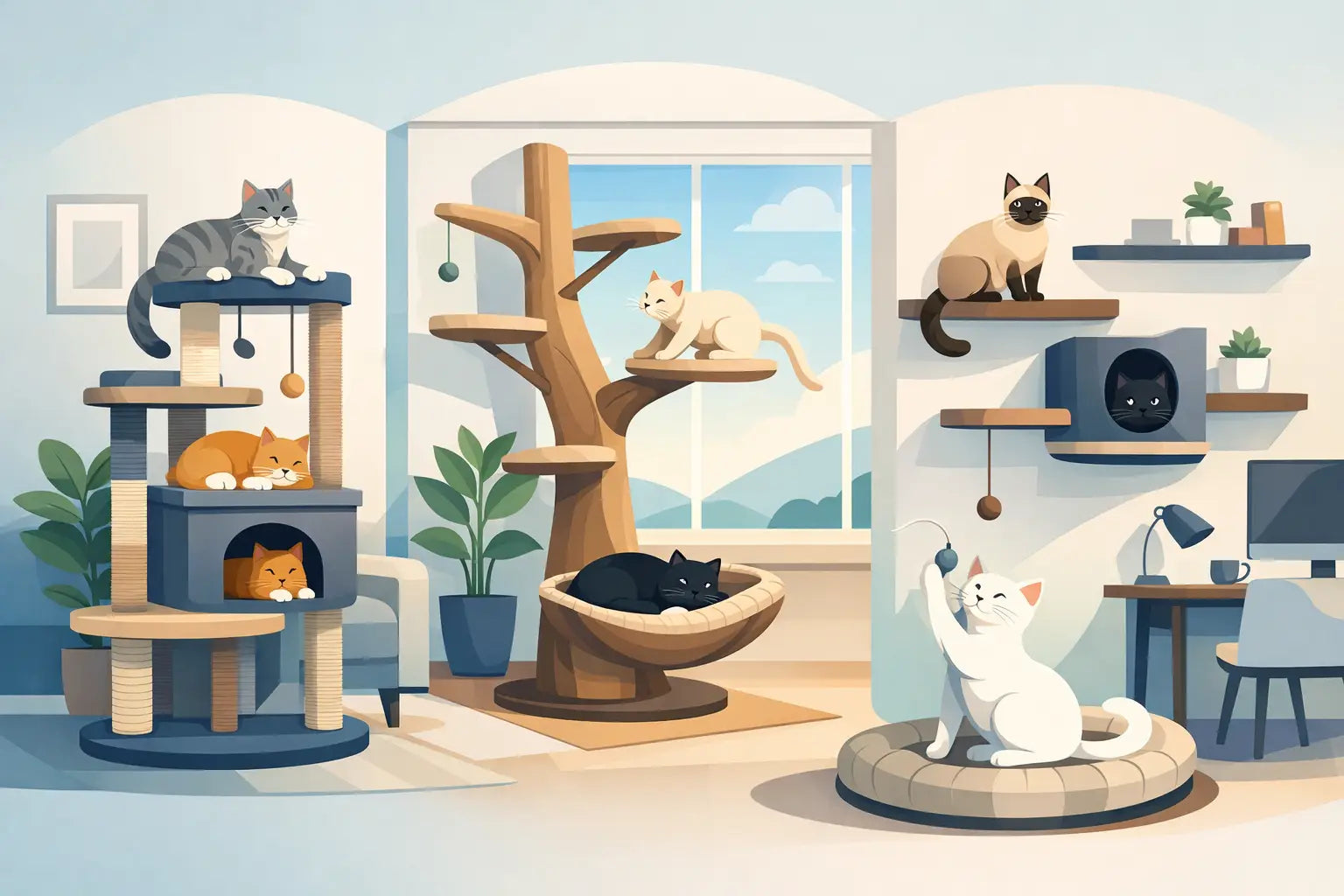
A cat staring at the top of a bookshelf is not being difficult. They are looking for a better view. Cat trees give indoor cats a spot that feels made for their favorite things: climbing, stretching, scratching, napping, and quietly supervising the household from above.
For pet parents, the right tree can make a noticeable difference in daily life. It may redirect scratching away from the sofa, give a shy cat a comforting retreat, or help an energetic kitten burn off some of that midnight zoomie energy. The best choice is not always the tallest or fluffiest option. It is the one that fits your cat, your room, and the way your home actually works.
Why Cat Trees Are More Than Cute Furniture
Cats are natural climbers, perch-seekers, and scratchers. Even the cat who spends most of the afternoon asleep in a sunbeam still benefits from having a place to stretch their body and claim as their own. A well-chosen cat tree brings several needs together in one cozy piece of pet furniture.
Vertical space is especially valuable in homes with limited square footage. A tall tree gives your cat another level of the room without taking over the floor. For cats who live with children, dogs, visitors, or other cats, height can also provide a welcome sense of distance. Being able to step away and observe can help a cat feel safer and more settled.
Scratching surfaces matter, too. Scratching is not bad behavior. It is how cats condition their claws, stretch their shoulders, and leave familiar scent and visual markers. When a tree includes sturdy sisal-wrapped posts, your cat has an inviting alternative to chair legs and upholstery. Results vary by cat, of course. A tree will not instantly erase an established couch-scratching habit, but placing it close to the favorite scratching spot can make the switch much easier.
Then there is the joy factor. Dangling toys, tunnels, platforms, hideaways, and hammocks turn an ordinary corner into a little cat adventure zone. For cats who spend all their time indoors, those small opportunities to climb and play can make the day feel much more interesting.
How to Choose Cat Trees for Your Cat and Home
Start with your cat rather than the product photo. A sleek, compact tree may look perfect in your living room, but a large adult cat may need wider platforms and thicker posts. A towering design may excite a bold climber, while an older cat with stiff joints may prefer a lower option with easy steps between levels.
Match the size to your cat
Look at the platform dimensions, not just the overall height. Your cat should be able to curl up comfortably without hanging over the edge. Larger breeds and big-boned cats generally need generous perches, roomy condos, and a broad base that will not wobble when they jump.
For kittens, a medium-height tree can be a great first choice. They will enjoy the climbing challenge, and you can place it where you can keep an eye on their enthusiastic leaps. If you have more than one cat, consider a design with multiple resting levels or separate beds. Cats who adore each other may share a perch, but they still appreciate having options.
Choose the right height
Height depends on both personality and placement. A tall cat tree near a window can become your cat’s favorite bird-watching station. It is a wonderful choice for confident cats who love to climb and survey their territory.
Lower cat trees work beautifully beside a couch, in a bedroom, or for senior cats who need a gentler route upward. You do not have to choose one extreme or the other. A shorter tree with a plush perch and scratching post can be just as loved as a floor-to-ceiling tower when it is placed in the right spot.
Check for stability first
The more active the cat, the more stability matters. A tree should have a solid, wide base and feel secure when your cat jumps onto it. Taller models may include anti-tip hardware for added peace of mind, especially in homes with playful kittens or cats who launch themselves onto platforms at full speed.
Give assembled furniture a quick check from time to time. Tighten loose hardware, inspect the scratching rope, and make sure perches are still firm. A cat that has one wobbly experience may decide the tree is not worth visiting again.
Think about materials and cleanup
Soft plush fabric makes a tree extra inviting for naps, while sisal offers a satisfying scratching texture. Carpeted styles can feel warm and cozy, but they may collect fur more easily. Smooth fabric or wood-look surfaces may be easier to wipe down, though some cats prefer a softer landing spot.
There is no single best material for every household. Consider how much your cat sheds, whether they tend to have hairballs, and how often you want to vacuum or spot-clean. A removable cushion can be especially handy in busy homes.
Where to Put a Cat Tree So Your Cat Uses It
A cat tree tucked into an unused corner may look tidy, but cats often want to be where the action is. The living room, home office, or bedroom can be a better choice than a hidden spare room. Your cat wants a perch, not exile.
Windows are prime real estate. A tree near a secure window gives your cat a changing view of birds, leaves, neighbors, and daily neighborhood activity. If the spot receives strong afternoon sun, make sure your cat can move to a cooler level or another resting place when they have had enough warmth.
If scratching furniture is the problem, place the tree near the furniture your cat already targets. This is one of the simplest ways to make a scratching post part of their routine. You can encourage curiosity with a favorite toy, a sprinkle of catnip if your cat enjoys it, or a few treats placed on a lower platform. Never force your cat onto the tree. A little patience usually works better.
In multi-pet homes, placement is even more thoughtful. Put a tree where a cat has a clear route down and does not feel trapped by a dog or another cat. A perch is meant to be a safe retreat, not a dead end.
Cat Tree Features Worth Considering
The best features depend on what your cat already loves. A dedicated napper may choose a plush condo or hammock every time. A curious climber may spend more time on staggered platforms and high perches. A playful kitten may be happiest with hanging balls or ropes, although loose or damaged toys should be removed promptly.
Some helpful features to consider include:
- Sisal scratching posts for daily claw care and full-body stretches
- Enclosed condos for cats who like quiet, tucked-away naps
- Multiple platforms for homes with more than one cat
- Window-height perches for curious observers
- Ramps or closely spaced levels for older cats and smaller kittens
Making a Cat Tree Part of Everyday Life
Once the tree is in place, make it feel familiar. Put a favorite blanket on a platform if it fits safely, play with a wand toy nearby, or offer praise when your cat chooses the scratching post. Cats often investigate new furniture on their own schedule. Some claim it immediately. Others watch it suspiciously for two days, then decide it has always belonged to them.
Rotate a toy or two around the tree to keep the area fresh, particularly for indoor cats. Pairing vertical space with daily interactive play is a lovely way to support exercise and connection. A cat tree is not a substitute for attention, but it gives your cat a comfortable place to relax after the fun.
At My Pet Your Pet Our Pet, the goal is simple: help you find everyday comforts that make life happier for the pets you love. Whether your cat needs a tall lookout tower, a compact scratch-and-nap station, or a cozy hideaway, there is a style that can fit your space without making your home feel crowded.
Choose a cat tree that feels safe, inviting, and suited to your cat’s favorite rituals. Soon enough, that empty corner may become the place where they stretch at sunrise, watch the world go by, and settle in for the kind of nap only a very content cat can take.

