

Cart
0
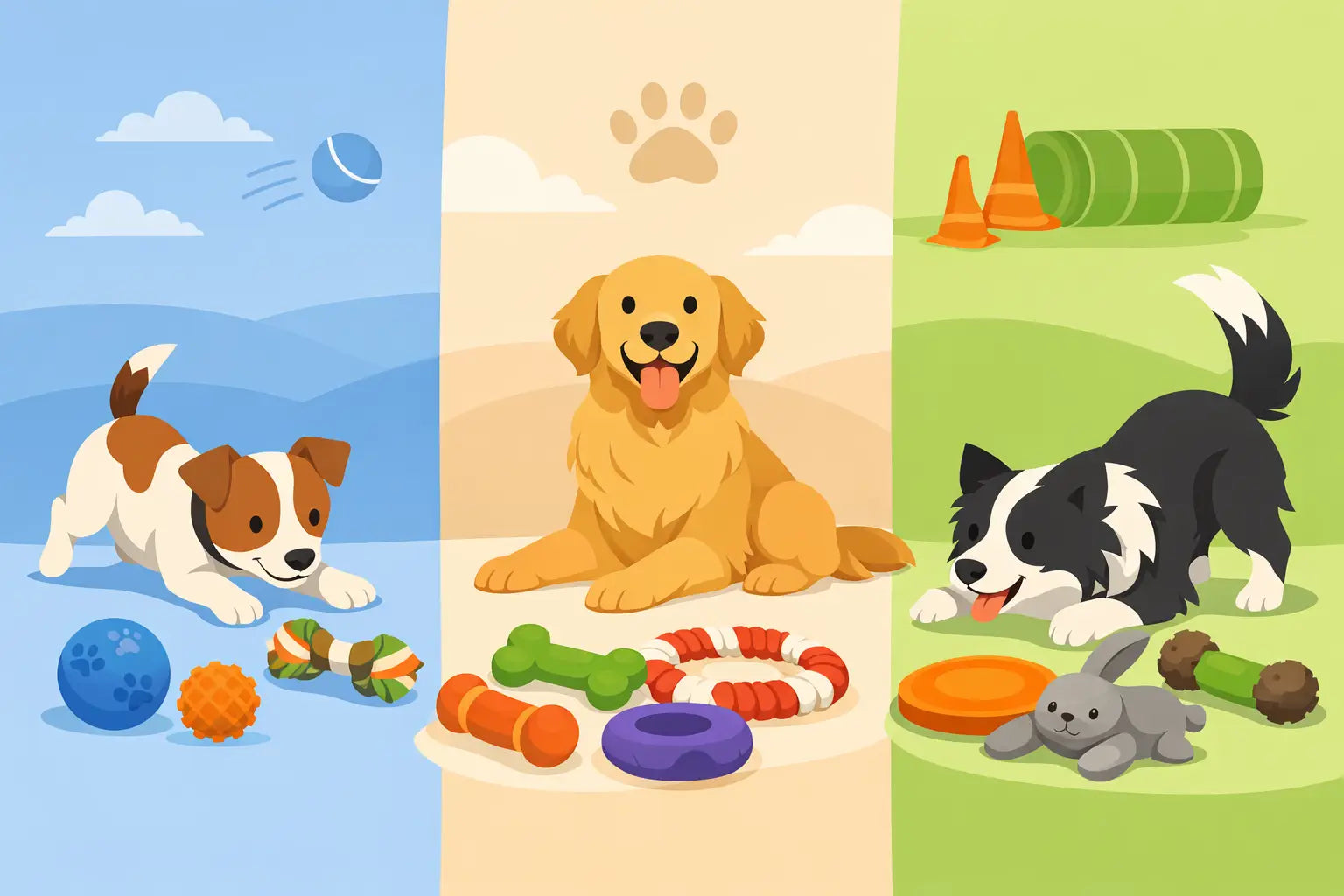
A toy can be your dog’s favorite part of the day - right up until it is too small, too damaged, or simply not made for the way they play. Learning how to choose safe dog toys is less about finding one perfect product and more about matching each toy to your dog’s size, habits, and happy little personality.
From enthusiastic puppies to seasoned sofa snugglers, every dog deserves playthings that bring joy without unnecessary risk. A few smart checks before playtime can help you fill the toy basket with options your best friend will love.
Start With Your Dog, Not the Toy
The cutest toy on the shelf is not always the right one for your dog. Before choosing colors, characters, or squeakers, think about how your pup actually plays. Do they gently carry toys around the house? Chase anything that rolls? Pull with all their might? Settle in for a focused chewing session?
A small, gentle dog may enjoy a soft plush or lightweight ball, while a powerful chewer often needs a sturdier option with fewer parts to pull loose. Puppies may need toys that soothe teething gums, and older dogs may prefer softer materials that are easier on sensitive teeth.
Size matters just as much. A toy should be large enough that your dog cannot swallow it whole, but not so oversized that they cannot comfortably carry or interact with it. When a ball, chew, or small toy can slip entirely behind your dog’s back teeth, it is too small for unsupervised play.
Choose Safe Dog Toys by Material and Construction
Dog toys come in plenty of materials, and each has a place in a well-rounded play routine. The key is choosing materials that fit the activity and checking them regularly for damage.
Rubber and durable chew toys
Rubber toys can be a great choice for dogs who enjoy chewing, especially when the rubber is made for pets and feels sturdy without being rock-hard. Some can also hold treats or kibble, turning snack time into a rewarding mental challenge.
Even a durable chew toy has limits. If your dog can tear off chunks, it is time to remove it. Very hard chews may also be rough on teeth for some dogs, so choose a texture that has a little give rather than one that feels like a stone.
Plush toys and comfort toys
Soft toys bring big comfort, especially for dogs that like to cuddle, carry, and gently shake their favorite friend. Look for strong seams and pet-safe stuffing. If a plush toy has embroidered details instead of plastic eyes, buttons, or glued-on decorations, that is usually a safer choice for curious mouths.
Plush toys are not automatically a match for every dog. A pup who loves to disembowel stuffed animals may need close supervision or a different toy style altogether. Once stuffing, squeakers, or fabric pieces start coming out, retire the toy before your dog has a chance to swallow them.
Rope toys
Rope toys can make tug-of-war and fetch more fun, and they are especially popular with dogs that love a good game with their people. Choose a rope that is appropriately thick for your dog’s mouth and tightly woven.
The trade-off is fraying. Loose strings can be tempting to chew and swallow, so check rope toys often. A little fuzz is normal after play, but long strands, unraveling knots, or missing sections mean it is time for a replacement.
Balls, fetch toys, and squeaky toys
Fetch toys are wonderful for active dogs, but the right size is non-negotiable. Pick a ball that your dog can carry without getting it lodged in their throat. Avoid using balls that are not designed for dogs, since they may splinter, crack, or present a choking risk.
Squeaky toys can be exciting, too. Just remember that the squeaker itself should stay securely inside the toy. For determined chewers, a squeaker-free toy may offer more peace of mind.
Watch for Small Parts and Surprise Hazards
A toy can look safe at first glance and still have details that do not belong in your dog’s mouth. Before handing over a new toy, give it a quick once-over. Check for plastic pieces, bells, ribbons, glued-on eyes, thin straps, loose tags, and detachable accessories.
These details may be fine for display, but they can become a problem when play gets energetic. If your dog tends to chew, pull, or shred, simple construction is usually the smarter choice. One-piece toys and toys with securely stitched details often hold up better than items with lots of decorations.
Also consider what is inside. Toys made for pets should use materials intended for animal play. When the product information is available, look for clear details about the material and care instructions. If something has a strong chemical smell, a sticky surface, or visible cracking right out of the package, skip it.
Match the Toy to the Moment
The safest toy is also one your dog can enjoy in the right setting. Some toys are great for independent play, while others are best reserved for time together.
Tug toys, for example, are made for interactive games. Hold your end low and steady rather than yanking upward, which can put strain on your dog’s neck. Let your dog win sometimes, too. It keeps the game fun and gives them a confidence boost.
Treat-dispensing toys are ideal when your dog needs a little quiet-time enrichment. Start with easy-to-reach treats or kibble so your dog understands the game, then make it more challenging as they learn. This kind of play can help turn a rainy afternoon or a busy work call into something more satisfying for your pup.
For fetch, choose an open area and give your dog breaks, particularly in hot weather. Excitement can make even an athletic dog overdo it. Fresh water and a few calm moments between throws go a long way.
Supervision Is Part of Toy Safety
Even a well-chosen toy needs occasional supervision. This does not mean you need to hover over every gentle game of fetch, but it does mean staying nearby when your dog tries a new toy or plays with something they could damage.
Dogs are wonderfully inventive. A toy that survives months with one pup might last ten minutes with another. Pay attention to how your dog uses it. If they are chewing pieces off, swallowing fabric, or obsessively trying to get to the stuffing or squeaker, that toy is not the right fit for their play style.
Rotate toys instead of leaving every option out all the time. Keeping a few toys aside and bringing them back later can make old favorites feel new again. It also gives you a natural chance to inspect each toy before it returns to the playroom.
Know When It Is Time to Replace a Toy
No dog toy lasts forever, especially the well-loved ones. Regularly check for cracks, sharp edges, loose stitching, exposed stuffing, separated layers, missing pieces, or strings that have started to unravel. When in doubt, replace it.
A damaged toy is not a failure. It usually means your dog had a wonderful time with it. Replacing worn toys promptly is simply part of caring for the pet who brings so much energy, comfort, and laughter into your home.
It can help to keep a small mix on hand: one toy for chewing, one for fetching, one for interactive play, and one soft favorite for quiet moments. That variety supports both physical activity and mental enrichment without asking one toy to do everything.
Make Playtime Feel Like Love
The best toy basket is not necessarily the biggest one. It is the one filled with choices that suit your dog and make you feel good about every toss, tug, chew, and cuddle. At My Pet Your Pet Our Pet, we believe everyday care should feel joyful, affordable, and made for the pets we call family.
Choose toys with your dog’s unique habits in mind, inspect them often, and stay ready to switch things up as their needs change. A safe toy is more than a fun distraction - it is one more small way to say, “You are loved here.”

