

Cart
0
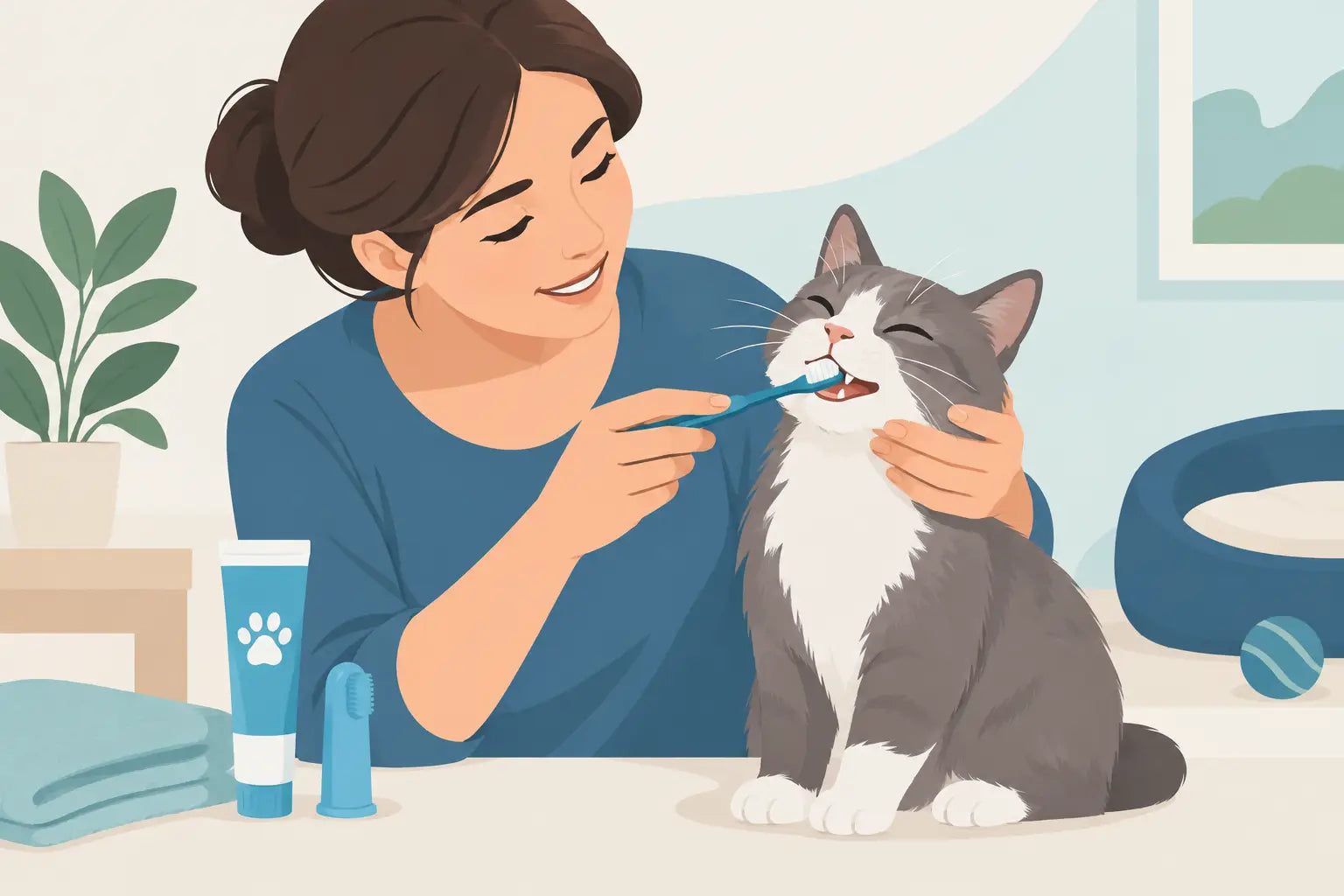
A cat may accept a new bed, a playful toy, or an extra-special treat in seconds. A toothbrush near their whiskers? That can feel like a very different negotiation. Learning how to brush cat teeth is less about getting it perfect on day one and more about building a calm, repeatable routine your cat can trust.
Dental care is one of those everyday acts of love that can make a real difference over time. Food residue and bacteria can collect along the gumline, leading to plaque, tartar, bad breath, and uncomfortable dental problems. Home brushing cannot replace veterinary exams or professional cleanings, but it is a helpful way to support your cat's mouth between visits.
Start With the Right Cat Dental Supplies
Keep the setup simple. You need a toothbrush made for cats, or a soft finger brush designed for pets, plus toothpaste formulated specifically for cats. Pet toothpaste comes in flavors many cats find appealing, such as poultry or seafood, and it is made to be safely swallowed.
Never use human toothpaste. Ingredients that are safe for people, including fluoride and xylitol in some products, may be harmful to pets. Human toothpaste also foams, which can be unpleasant for a cat that does not understand why their mouth suddenly feels full of bubbles.
A small soft-bristled pet toothbrush works well for many cats. A finger brush can feel less intimidating when you are first introducing the process, though it may not reach as precisely around the back teeth. If your cat dislikes either option at first, use a clean gauze pad wrapped around your finger to begin. The best tool is the one you can use gently and consistently.
Choose a quiet moment when your cat is relaxed, perhaps after playtime or a meal. Have a favorite treat ready for afterward. A soft towel can help create a secure spot for wiggly cats, but avoid wrapping or holding them tightly unless they are already comfortable with it. Brushing should not feel like a wrestling match.
How to Brush Cat Teeth Step by Step
The first few sessions may involve no brushing at all. That is normal. Slow introductions often lead to better long-term results than trying to clean every tooth right away.
Let Your Cat Sample the Toothpaste
Place a tiny dab of pet toothpaste on your fingertip and let your cat lick it. This lets them connect the new scent and flavor with something pleasant. Repeat once a day for a few days if your cat is cautious. There is no prize for rushing this stage.
Get Comfortable Touching the Mouth
When your cat is happy to taste the toothpaste, gently lift one side of their lip for a second or two. Praise them in a soft voice, then offer a treat or a little more toothpaste. Work on both sides of the mouth, but keep the session very short.
Next, use your toothpaste-covered finger or gauze to lightly rub the outside of the teeth and gumline. Focus on the canine teeth first, since they are easy to reach. Most cats will not enjoy having their mouths held open, and they do not need to be. The outside surfaces of the teeth are where plaque commonly gathers and where you can do the most useful work.
Introduce the Brush Slowly
Add a small amount of toothpaste to the pet toothbrush. Lift your cat's lip and use tiny, gentle circular motions where the tooth meets the gumline. Start with just a few strokes on one side, then stop while the experience is still positive.
As your cat adjusts, gradually brush the outside of the upper and lower teeth on both sides. The back teeth deserve attention because they tend to collect more plaque, but do not force access. A brief, peaceful brushing of the front and side teeth is far better than a long session that makes your cat hide when they see the brush.
Finish With Something Your Cat Loves
End on a good note every time. Offer a treat, a favorite toy, gentle affection, or a cozy moment in their favorite spot. Your goal is for the toothbrush to predict good things, not a stressful interruption.
For most cats, daily brushing is the gold standard. Real life can be busy, and some cats need more time to cooperate. If daily brushing is not yet possible, aim for several sessions each week and keep building from there. Consistency matters more than one heroic attempt every few weeks.
What to Do if Your Cat Resists
Some resistance is expected, especially at the beginning. A cat who turns away, licks the toothpaste, or tolerates only a few seconds is giving you useful information: slow down. Go back to the last step they accepted comfortably, whether that is tasting toothpaste or letting you touch their lips.
It may help to brush in a familiar location, such as a counter covered with a nonslip towel or your cat's usual resting place. Keep your movements calm and predictable. Cats notice tension quickly, so a hurried approach can make a simple routine feel suspicious.
Avoid scolding, forcing your cat's jaw open, or pinning them down to finish the job. These methods can create fear and make future care much harder. If your cat becomes frightened, growls, swats, or shows signs of pain, stop the session. Dental care should protect their well-being, not become a daily battle.
Kittens can often learn the routine more easily because they are still getting used to handling, but adult cats can learn too. An older cat may need a slower introduction, particularly if they have never had their mouth touched before. Patience is part of the process, and every calm second counts.
Watch for Signs Your Cat Needs a Vet
Brushing is preventive care, not a way to treat existing dental disease. Schedule a veterinary visit if you notice persistent bad breath, red or bleeding gums, yellow or brown buildup on teeth, drooling, pawing at the mouth, trouble eating, or a sudden preference for soft food. Cats are very good at hiding discomfort, so changes in appetite or behavior deserve attention.
Do not brush an area that appears painful or is bleeding unless your veterinarian has advised you to do so. A cat with dental disease may need professional treatment before home brushing can be comfortable. Once their mouth is feeling better, your vet can help you decide when and how to restart a home routine.
Regular wellness exams matter even for cats who seem fine. Your veterinarian can check areas below the gumline that a toothbrush cannot reach and offer guidance based on your cat's age, health, and dental history.
Make Brushing Part of Everyday Cat Care
A dental routine is easier to keep when the supplies are within reach. Store your cat's toothbrush and toothpaste with the grooming essentials you already use, so it becomes as familiar as brushing their coat or trimming nails. Replacing worn brushes and keeping a backup on hand can also prevent small interruptions from becoming skipped weeks.
Dental treats, water additives, and dental toys may be useful additions for some cats, but they are not equal substitutes for brushing. Their benefit depends on the product and on whether your cat will actually use it. Think of them as supportive extras alongside brushing, vet care, nourishing food, play, and all the little routines that help your pet feel loved.
At My Pet Your Pet Our Pet, we believe everyday care should feel doable, not daunting. Start with one gentle touch, one lick of cat-safe toothpaste, and one quick session at a time. Your cat may never send a thank-you note, but a healthier, more comfortable smile is a lovely way to care for a family member who is yours, mine, and ours.

