

Cart
0
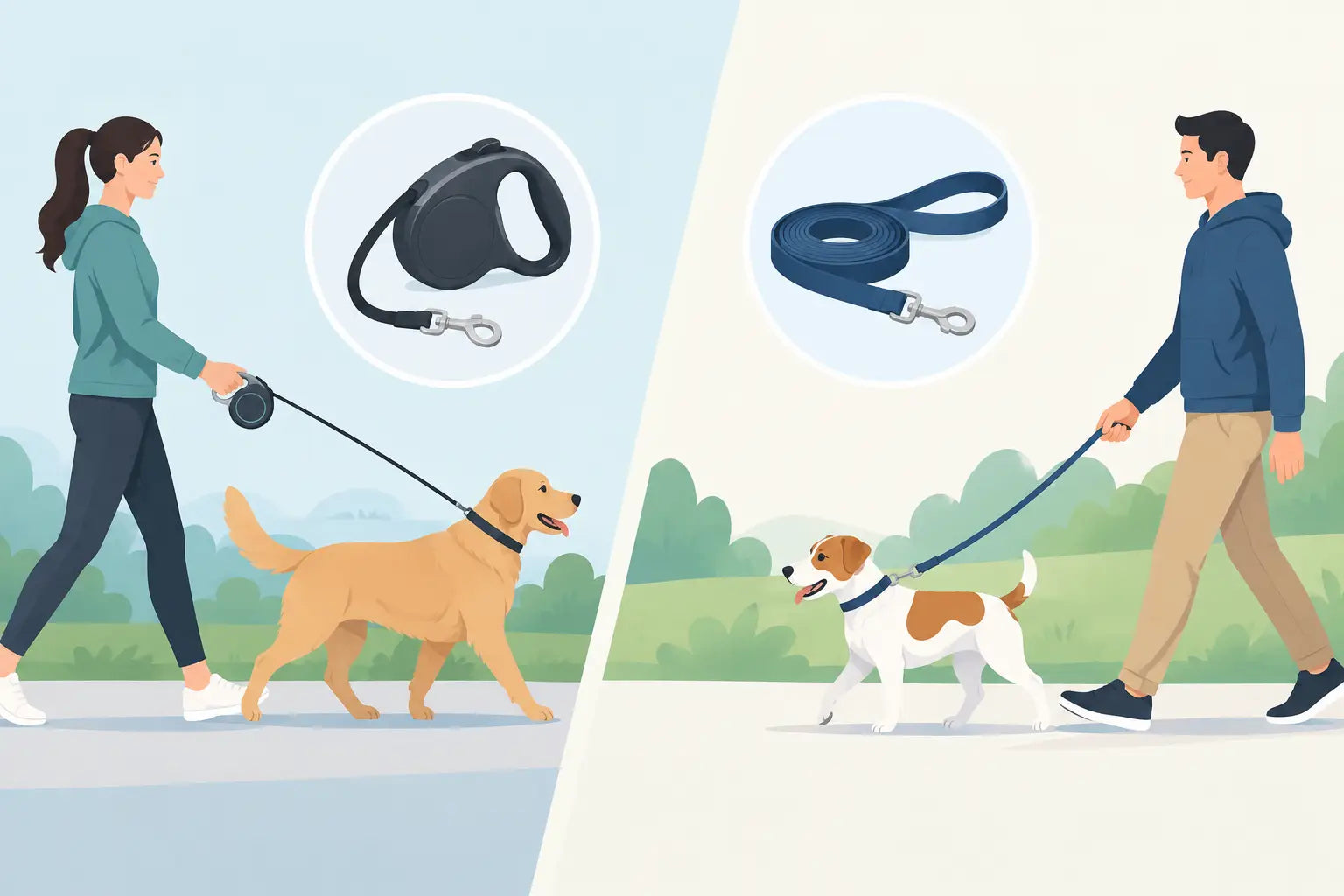
A leash is more than a walk-time accessory. It is the connection between you and the dog you love when a squirrel bolts, a neighbor rounds the corner, or your pup simply needs a little room to sniff. Choosing a retractable versus standard leash can change how confident, comfortable, and in control those everyday moments feel.
There is no single best choice for every dog. A calm, responsive dog on a quiet trail may enjoy the extra freedom of a retractable lead. A young puller learning polite sidewalk manners often benefits from the clear limits of a standard leash. The right fit comes down to your dog's habits, your walking environment, and the kind of outing you want to share.
Retractable Versus Standard Leash: The Main Difference
A standard leash has a fixed length, commonly 4 or 6 feet. It gives your dog a consistent amount of space and gives you a direct, easy-to-feel connection at the handle. Flat nylon, rope, and padded options can all make walks more comfortable, but the basic idea stays the same: your dog knows the boundary, and so do you.
A retractable leash uses a cord or tape that extends from a plastic handle. Your dog can move farther away, and you can use a brake or lock to stop the line at the desired length. That added range can make a familiar open area feel more interesting for a dog who loves to explore at a safe pace.
The difference is not only the number of feet between you and your pet. It is the amount of immediate control you have. With a standard leash, you can shorten your dog's distance quickly by moving your hands or stepping closer. With a retractable model, your dog may reach the end of the line before you can press the brake, creating a sudden stop or a stronger pull.
When a Retractable Leash Can Be a Good Match
Retractable leashes are popular for a reason: many dogs genuinely enjoy having room to investigate. For a well-trained dog with a reliable recall and a relaxed walking style, a retractable leash can offer more freedom than a fixed lead without letting them roam loose.
They tend to work best in quiet, open spaces with good visibility. Think of a wide path with few people, a low-traffic park, or a large outdoor area where you can see cyclists, children, other dogs, and wildlife before your dog does. In these settings, you can keep the leash shorter when needed and offer more line when it is appropriate.
This style can also be useful for slow sniff walks. Sniffing is not wasted time for dogs. It gives them information, mental stimulation, and a chance to enjoy being outside on their terms. A retractable leash lets a polite dog follow an interesting scent without constantly pulling you off balance.
Still, extra distance requires extra attention. Keep the line short near roads, driveways, parking lots, intersections, crowded paths, and unfamiliar dogs. Never assume the brake will prevent every surprise. Check that the lock works smoothly before leaving home, and choose a leash rated for your dog's size and weight.
Retractable leash concerns to consider
The very feature that creates freedom can make quick situations harder to manage. A dog at the end of a long line can build momentum before you react. If they dash toward another pet, a person, or a tempting smell, the stop may be abrupt for both of you.
The cord can also become tangled around legs, paws, benches, or bike wheels. Thin cords may be difficult for others to see, especially at dusk. For that reason, a retractable leash is usually not the strongest choice for busy sidewalks, dog-friendly stores, veterinary waiting rooms, or any place where close control matters.
Avoid grabbing the moving cord with your hand. It can cause painful rope burns or cuts. Use the handle and brake as designed, and inspect the leash for fraying, cracks, sticky buttons, or a line that no longer retracts properly.
Why Standard Leashes Are Everyday Favorites
For many families, a standard leash is the dependable go-to. It is simple, easy to use, and well suited to the moments when your dog needs to stay close. A 6-foot leash often offers a happy middle ground: enough room for comfortable walking and sniffing, with enough control for neighborhoods and shared paths.
Standard leashes are especially helpful during training. Dogs learn through consistency, and a fixed boundary makes it easier to teach loose-leash walking, stopping at curbs, greeting people calmly, and checking in with you. If your dog pulls, a standard leash helps you respond in a steady, predictable way rather than allowing them to pull farther ahead.
They are also a smart choice for puppies, newly adopted dogs, strong dogs, and dogs that react to squirrels, strangers, or other pets. That does not mean these dogs cannot enjoy outdoor enrichment. It simply means safety and communication come first while you build skills together.
Material matters, too. A lightweight nylon leash may be great for a small dog, while a thicker rope leash with a cushioned handle can feel better for a larger companion. Reflective stitching can add visibility for early morning or evening walks, and a traffic handle near the clip can provide a closer hold when passing distractions.
Think About Your Dog, Not Just the Leash
The best leash is the one that supports your particular pet. A leash that feels wonderful for one dog may be frustrating or unsafe for another. Before choosing, consider your dog's size, strength, age, and usual behavior outside.
A tiny dog may not need a heavy handle that pulls at their harness. A powerful dog needs hardware and material that can handle their strength. An older dog who strolls and sniffs may enjoy a little more room in quiet spaces, while an energetic adolescent may need a standard leash and regular practice before earning that freedom.
Also consider how your dog responds to triggers. If they freeze, bark, lunge, or chase when they see another animal, keep them closer with a fixed leash. A retractable leash does not replace training, recall practice, or a secure harness. It is an accessory, not a safety plan.
Harness fit matters alongside leash choice. A comfortable, properly fitted harness can distribute pressure more gently than attaching a leash to a collar, particularly for dogs that pull or have delicate necks. Check the fit often, especially for growing puppies and fluffy dogs whose coats can hide loose straps.
Match the Lead to the Walk You Are Taking
You do not have to choose one leash forever. Many pet parents keep both styles and use each one with purpose. A standard leash can be the everyday choice for neighborhood walks, appointments, travel, and training. A retractable leash can be reserved for calm exploration in the right environment, once your dog has the manners to use it safely.
Before heading out, take a quick look at your plans. Will you be near traffic? Is the area crowded? Are there loose dogs, wildlife, or narrow paths? If the answer is yes, choose the leash that keeps your dog close. If you are in a spacious, low-distraction place with a responsive dog, extra sniffing room may be a lovely treat.
Whichever style you bring home, make it part of a positive routine. Pair the leash with a properly fitted harness, a few favorite treats, and patient practice. Your dog does not need the longest lead or the trendiest handle. They need a walk that feels safe, comfortable, and full of the little moments they love sharing with you.
