

Cart
0
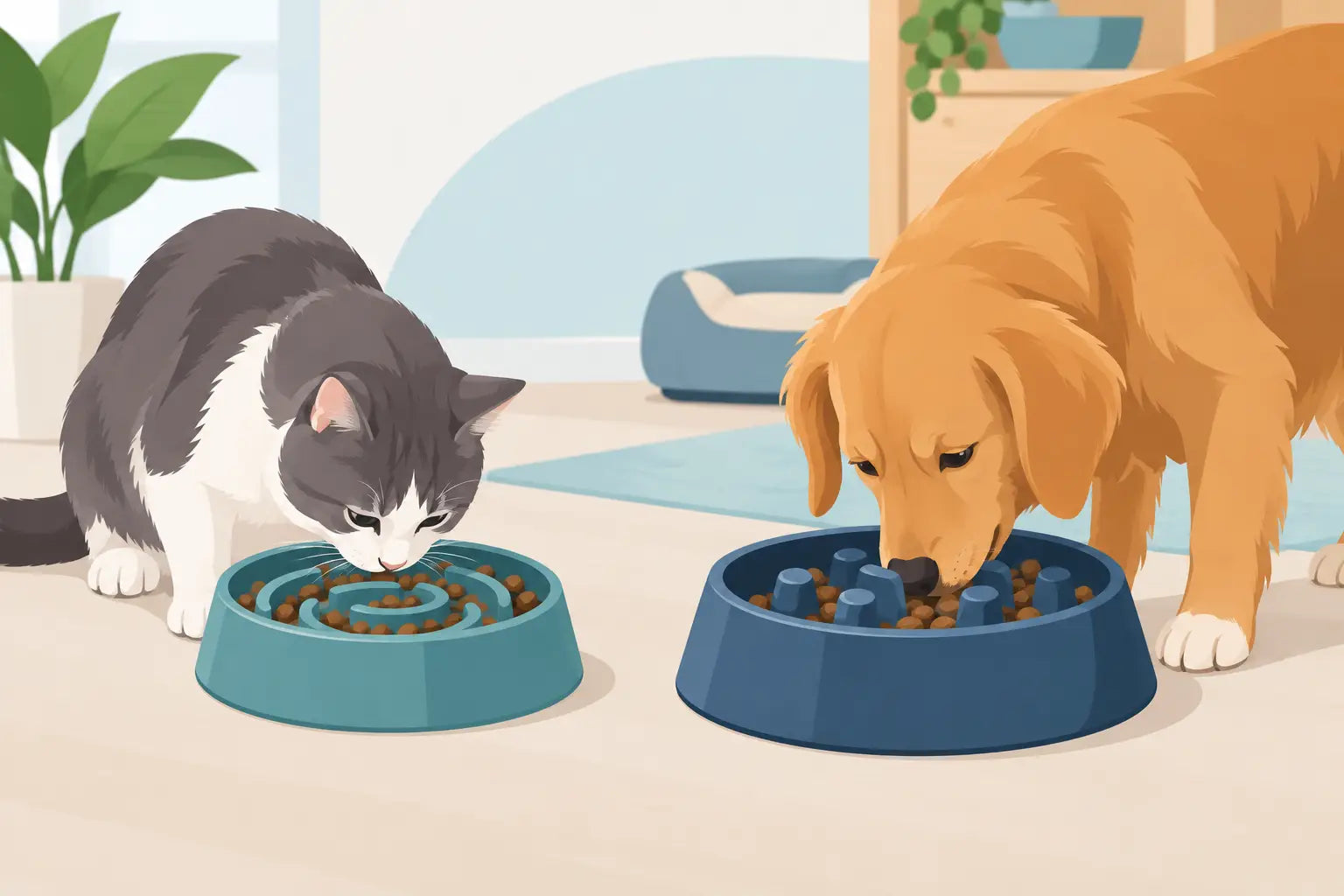
A pet who finishes dinner in seconds can turn every meal into a worry. Maybe your dog coughs after eating too fast, begs for more right away, or leaves you wondering whether that rushed routine is upsetting their stomach. Cats can be speedy eaters, too, especially in multi-pet homes. So, are slow feeders good for the pets we love? Often, yes - when the feeder suits your pet’s eating style, size, and daily needs.
Slow feeders are feeding bowls, mats, and puzzle-style dishes designed to make food less of a race. Instead of taking one or two big gulps, your pet has to work around ridges, pockets, or a maze pattern to reach each bite. That little extra challenge can make mealtime calmer, more engaging, and easier to manage.
Are Slow Feeders Good for Fast Eaters?
For many dogs, a slow feeder is a simple answer to a familiar problem: dinner disappears before you have put the food bag away. Slowing the pace may help reduce gulping and the noisy post-meal discomfort that can come with it. It also gives your pet time to chew and settle into a more relaxed routine.
A slower meal can be especially helpful for food-motivated dogs that act as though every bowl is their last. The bowl creates a gentle pause without taking away the joy of eating. For pets who need more activity during the day, working through a meal can add a welcome bit of mental enrichment, too.
That does not mean a slow feeder is a cure-all for digestive trouble. Dogs that vomit regularly, seem painful after meals, have a swollen belly, or repeatedly retch without bringing anything up need veterinary attention right away. Large, deep-chested dogs and pets with a history of bloat deserve an individualized feeding plan from their veterinarian.
Benefits Beyond a Slower Dinner
The biggest benefit is right in the name, but slow feeders can do more than reduce speed. They can turn ordinary kibble into a small daily activity. This matters for indoor pets, rainy-day routines, and busy households where a little extra enrichment goes a long way.
For dogs, a maze bowl can redirect some of that eager food energy into sniffing, licking, and problem-solving. For cats, a shallow puzzle feeder may encourage a more natural hunt-and-search feeling. It is not a replacement for playtime, walks, or attention from their favorite people, but it is an easy way to make a regular meal more interesting.
Slow feeders can also help create separation at mealtime. If one pet eats calmly while another finishes in a flash and circles back for a second serving, different feeder styles may make it easier to supervise portions. Every pet still needs their own measured meal, especially when weight management or special diets are involved.
When a Slow Feeder May Not Be the Best Choice
Slow feeders are helpful tools, not mandatory equipment. Some pets already eat at a comfortable pace and may find a complicated bowl frustrating rather than fun. If your dog gives up, whines, paws aggressively at the feeder, or seems stressed around food, choose a simpler design or go back to a regular bowl.
Pets with short snouts, dental pain, arthritis, limited vision, or mobility challenges may struggle with tall ridges and narrow food channels. Older pets often do better with wide, low patterns that do not require deep reaching. A raised feeding setup may be appropriate for some pets, but it is worth discussing with your veterinarian rather than assuming higher is always better.
Very young puppies and kittens can use age-appropriate feeders, but start simple. Their meals are an important part of growth, and they should not have to work so hard that they leave food behind. Watch the first few meals closely to make sure your little one can eat comfortably and finish their proper portion.
Choosing the Right Slow Feeder
The best feeder is the one your pet can use safely and happily. There is no prize for choosing the most difficult maze. Start with your pet’s face shape, food type, and enthusiasm level.
For dry food, a sturdy slow-feed bowl with rounded grooves is often a great first choice. Look for a non-slip base so an excited eater does not push dinner across the kitchen. For wet food, soft treats, or soaked kibble, a lick mat or shallow feeder can be easier to clean and gentler for pets who dislike deep bowls.
A few details are worth checking before you bring a feeder home:
- Choose a size that holds your pet’s full measured portion without piling food over the ridges.
- Pick smooth, rounded channels that are easy for noses, tongues, and paws to navigate.
- Favor durable, pet-safe materials and inspect the feeder regularly for cracks, loose pieces, or chew damage.
- Make cleaning realistic. If food gets trapped in hard-to-reach corners, the feeder may not stay fresh enough for everyday use.
How to Introduce a Slow Feeder Without Stress
Your pet does not need to earn dinner through an impossible puzzle. Make the switch easy at first by spreading part of their normal meal across the feeder’s simplest sections. If the pattern has deeper pockets, leave those empty for the first few meals.
Use their usual food and keep the portion the same. A slow feeder changes the pace, not the amount your pet needs. Once your dog or cat understands the bowl, you can place food more evenly throughout the design.
Stay nearby during the first use. You are looking for relaxed curiosity, not frustration. A little extra sniffing and licking is normal. Repeated barking, growling, frantic scratching, or walking away from food means the feeder may be too challenging, too unfamiliar, or simply not the right fit.
If you feed multiple pets, give each one a separate space. Slow feeders can make meals take longer, which is useful, but it can also invite food stealing if pets are crowded together. A quiet corner, a closed door, or supervised feeding helps every member of the family enjoy their own dinner in peace.
Cleaning Matters More Than You Think
Food residue can hide in grooves, especially when you use wet food or treats. Wash the feeder after meals according to the product instructions, using warm water and pet-safe dish soap. Rinse thoroughly and let it dry fully before the next meal.
Check silicone mats and plastic bowls for wear. A torn edge or deep scratch can hold bacteria and may tempt a determined chewer to pull off a piece. Replace damaged feeding accessories promptly. A fresh, clean bowl keeps the good part of slow feeding - a more thoughtful meal - from becoming a messy hassle.
A Better Mealtime Can Be a Small Change
Slow feeders work best when they make your pet’s routine feel calmer, not more complicated. Choose a design that matches their abilities, introduce it with patience, and keep an eye on how they respond. Whether your pet needs a gentler pace, a little more enrichment, or simply a more enjoyable dinner ritual, the right feeding accessory can add one more caring moment to the day - because every meal should feel like it was made with love.

