

Cart
0
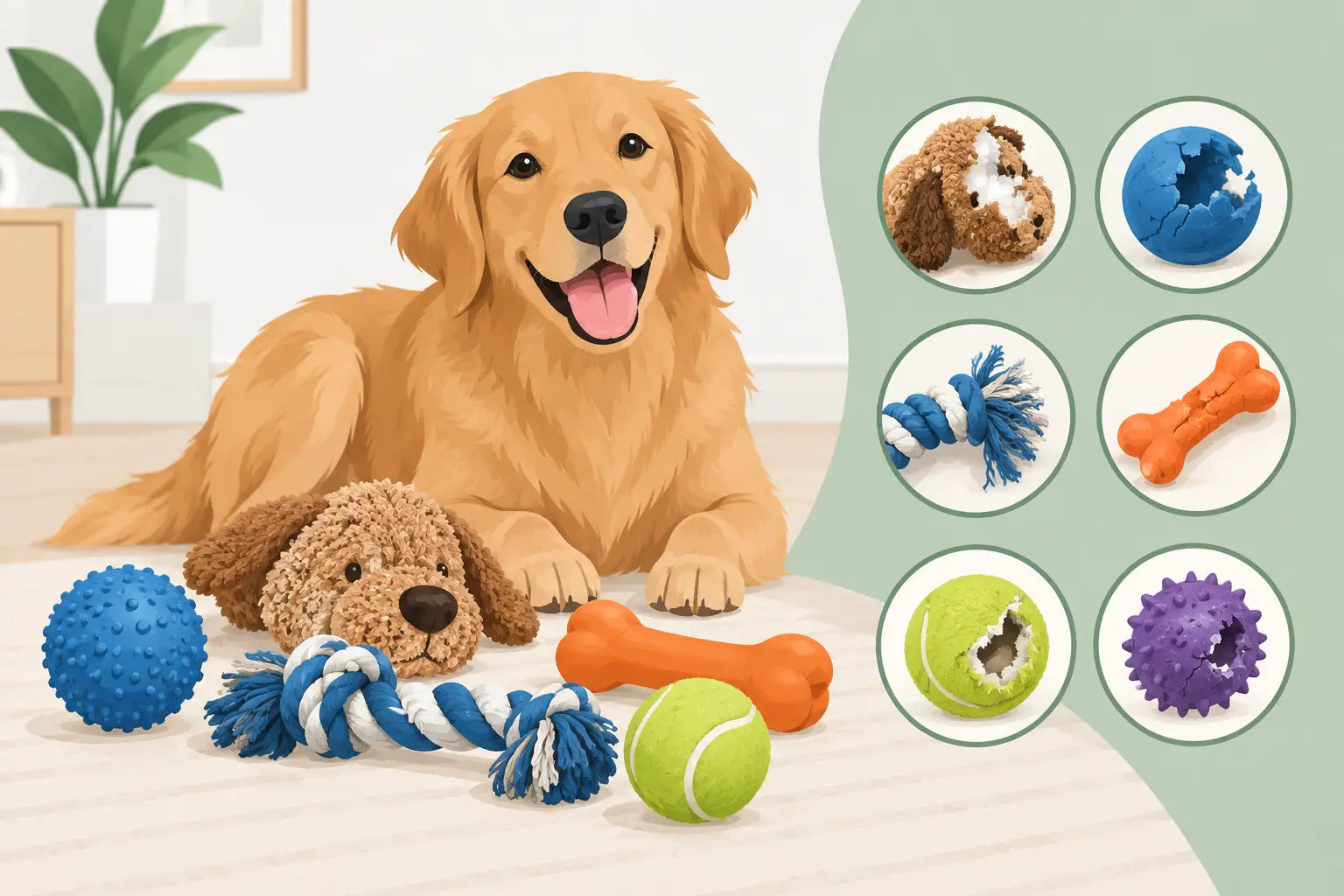
That well-loved squeaky toy may be your dog’s favorite thing in the house, but a favorite toy can eventually become a safety risk. Knowing when to replace dog toys helps protect your pup from swallowed pieces, sharp edges, hidden bacteria, and frustrating playtime failures. The good news? You do not need to toss every toy at the first tooth mark. A quick check during cleanup can tell you whether a toy is still ready for another round of fetch or ready for retirement.
Why worn dog toys deserve a closer look
Dogs do not play gently because they love their toys less. Chewing, tugging, shaking, fetching, and carrying are all natural ways to burn energy and have fun. Over time, though, those happy habits wear down fabric, rubber, rope, and plastic.
A damaged toy can break into pieces that may become choking hazards or cause intestinal blockages if swallowed. Loose stuffing, frayed rope strands, exposed squeakers, cracked plastic, and broken seams all deserve attention. Toys can also collect drool, dirt, food residue, and bacteria, especially if they spend time outside or travel from room to room.
Replacing a toy is not about making your dog’s toy basket look brand-new. It is about keeping play safe, interesting, and full of the comfort your pet deserves.
When to replace dog toys: 8 clear signs
A toy does not have to be completely destroyed to be past its safe-playing days. Watch for these changes, especially if your dog is a powerful chewer or likes to pull apart plush toys.
1. Pieces are coming loose. If stuffing, rope fibers, plastic bits, or rubber chunks are separating from the toy, remove it right away. Even small pieces can be tempting for a curious dog to swallow.
2. The toy has a hole, tear, or split seam. A tiny puncture in a plush toy can quickly become an opening for stuffing and squeakers. With rubber toys, cracks can widen with every bite and create uneven edges.
3. There are sharp or rough edges. Hard plastic and tough nylon toys can become jagged after repeated chewing. Run your hand over the surface. If it feels sharp enough to scratch your skin, it is not suitable for your dog’s mouth.
4. The toy is smaller than it used to be. Some chew toys wear down gradually, which can make them small enough to lodge in your dog’s throat. If a toy can fit entirely behind your dog’s back teeth, choose a larger replacement.
5. The squeaker or other internal part is exposed. Many dogs are determined to find the source of that exciting squeak. Once they do, the internal piece can become a swallowing hazard. Retire the toy before your pup gets the chance.
6. It stays dirty or smells unpleasant after washing. A washable toy should come clean and dry thoroughly. If odors linger, mildew appears, or grime is trapped in cracks and folds, it is time for a fresh one.
7. Your dog is suddenly shredding it faster. A toy that used to last months may no longer match your dog’s chewing style, size, or strength. This is common as puppies grow into adult teeth or when a bored dog becomes extra determined during play.
8. Your dog no longer enjoys it. Safety is the first reason to replace a toy, but interest matters too. If your pup walks away from an old toy but lights up for a different texture, shape, or style, rotating in something new can bring back the fun.
Different toy types wear out differently
Not every dog toy follows the same replacement schedule. A soft plush toy may look worn after a few enthusiastic play sessions, while a durable rubber toy can last much longer. The material, your dog’s play habits, and how often the toy is used all make a difference.
Plush toys and stuffed animals
Plush toys are cozy, comforting, and wonderfully fun for gentle carrying and indoor games. They are also the most likely to develop torn seams and loose stuffing. Check them often, particularly after tug games or any play session where your dog likes to “disembowel” the toy.
A small loose thread is worth trimming if the seam is otherwise secure. But once the fabric tears open, the stuffing comes out, or the squeaker becomes reachable, the toy should be removed. Choose reinforced plush options for dogs who love soft toys but tend to play with big enthusiasm.
Rope toys
Rope toys are great for supervised tugging and tossing, but they can fray over time. Long strands are not harmless. If swallowed, string-like material can create serious digestive problems.
Replace rope toys when the strands become loose, thin, or heavily unraveled. Do not let a shredded rope toy become a chew toy that stays on the floor all day. A fresh rope is a simple way to keep tug time safer.
Rubber and chew toys
Rubber toys can be an excellent choice for dogs who love to chew, especially when the toy is sized correctly and designed for their chewing level. Still, “durable” does not mean indestructible. Inspect for cracks, missing chunks, deep bite marks, and weakened areas around openings.
A toy with shallow tooth impressions may be fine. A toy with gouges, tears, or pieces breaking off is not. For determined chewers, select toys made for stronger chewing and supervise early play sessions to see how the material holds up.
Balls, plastic toys, and fetch toys
Tennis-style balls, plastic balls, and throw toys need regular checks too. Discard a ball that is cracked, split, flattened, or small enough for your dog to swallow. If the outer covering on a tennis-style ball is heavily worn, it may become easier to tear apart.
For fetch, the best toy is one your dog can carry comfortably without trying to gulp it. Size matters more than many pet parents realize. When in doubt, go a little larger.
How often should you inspect dog toys?
For most households, a quick weekly toy check is a practical habit. Gather toys while tidying up, shake out plush toys, examine seams, look for missing pieces, and give hard toys a close feel. Toys used every day, toys left outdoors, and toys for strong chewers deserve a look more often.
You can also inspect toys right after a particularly energetic session. If your dog has spent 20 minutes chewing in one spot, playing tug with a friend, or working hard to get treats from a puzzle toy, it takes only a moment to make sure everything is still intact.
There is no universal timeline such as replacing every toy every month. Some toys last a year with gentle use, while others need replacing within days. Let the toy’s condition, not just its age, guide your decision.
Clean toys to help them last, but do not force a rescue
Regular cleaning can extend the life of many toys and make playtime more pleasant. Follow the care instructions for the specific material. Some plush toys can be washed, while rubber toys may only need warm water, mild soap, and thorough rinsing. Always let toys dry completely before returning them to your dog.
Cleaning should never be used to hide damage. A washed toy with a split seam is still a split toy. Likewise, tape, glue, staples, or improvised repairs are not safe fixes for a toy that goes in your dog’s mouth. Replacing one worn toy is much smarter than risking an emergency vet visit.
Keep the toy basket fresh with rotation
Buying replacements does not mean filling the floor with more and more toys. Try keeping a smaller group available and rotating the rest every few days. Familiar toys can feel exciting again after a short break, and you will have an easier time noticing when something starts to wear out.
Aim for a mix that suits your dog: something soft for comfort, something durable for chewing, something for fetching, and something that encourages interactive play with you. Puppies may need gentler textures while their mouths are developing. Adult dogs with powerful jaws may need sturdier options. Senior dogs may appreciate softer toys that are easier to pick up and carry.
Your dog’s favorite toy holds a lot of happy memories, and replacing it can feel a little sad. But a fresh, safe toy means more tail wags, more play, and more moments together. At My Pet Your Pet Our Pet, there is always room in the toy basket for the next favorite.
