

Cart
0
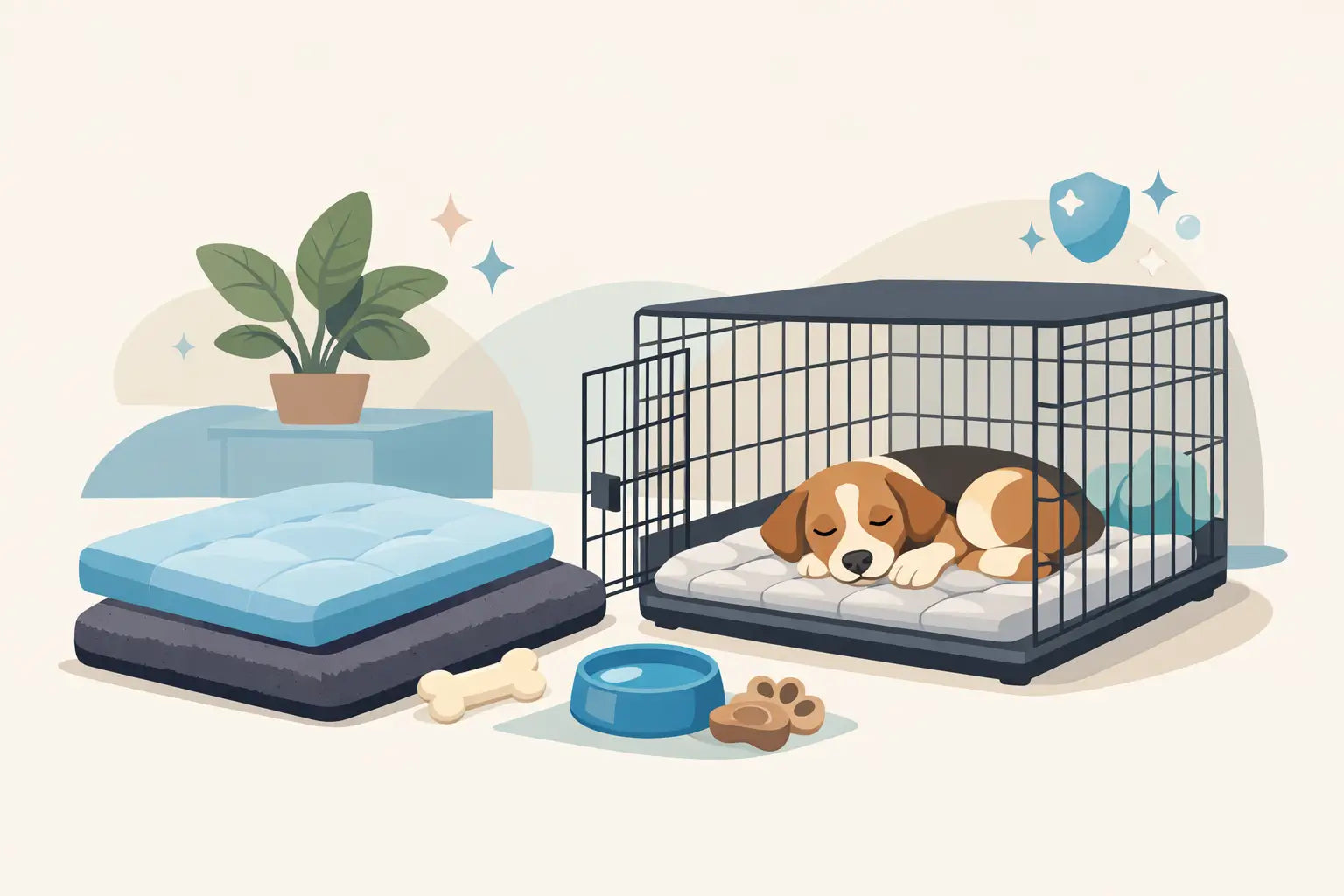
A crate can be your dog’s quiet little room: a place for post-walk naps, calm downtime, and feeling safe while the household gets busy. The best dog crate pads make that space feel far more inviting without creating a laundry nightmare for you. The right pick depends less on a fancy label and more on your dog’s size, habits, age, and personal definition of comfort.
What Makes a Dog Crate Pad Worth Buying?
A good crate pad should sit flat, feel comfortable, and handle real life. That means muddy paws after a rainy walk, a shedding season that seems to last forever, and the occasional spilled water bowl. It should also fit the crate well enough that your dog can stretch out without the pad bunching into one corner.
Comfort matters, but a thicker pad is not automatically the better choice. A young, healthy dog who runs warm may be happiest on a slim, breathable mat with light cushioning. A senior dog, a smaller breed, or a dog with stiff joints may appreciate more supportive padding that takes pressure off hips and elbows. Think about how your pet sleeps at home. Do they curl into a tight little ball, sprawl belly-up, or nest and paw at bedding before settling down? Their usual sleep style tells you a lot.
The fabric is just as important as the fill. Soft fleece feels cozy in cooler rooms, while canvas-like or tightly woven covers can be more practical for dogs who track in dirt or like to dig before lying down. For everyday convenience, removable or machine-washable covers are a big win. A clean crate pad keeps the crate smelling fresher and gives your dog a more pleasant place to rest.
Best Dog Crate Pads by Your Dog’s Needs
There is no one pad that suits every pup. Choosing by need helps you skip features that sound nice but will not work for your home.
For puppies and house-training stages
Puppies are adorable, curious, and not always predictable. During early crate training, choose a pad that is easy to wash and not overly plush. Deep, fluffy bedding can absorb accidents and may encourage a puppy who loves to shred or burrow.
A thin, washable crate mat is often the smart starting point. It adds a familiar soft surface without making cleanup difficult. If your puppy is still chewing bedding, supervise closely and consider waiting on a padded bed until they are reliably settling down rather than pulling at seams or stuffing.
For chewers and determined diggers
Some dogs see a crate pad as a cozy bed. Others see it as a challenge. If your dog scratches, tears, or chews, look for a simpler design with durable fabric, reinforced stitching, and minimal loose details. Skip decorative buttons, thick faux fur, exposed zippers, and fluffy fill that can become a safety concern if swallowed.
Even durable bedding is not truly chew-proof. A pad is best introduced when you can observe your dog’s behavior. If chewing starts, remove the pad and redirect them to an appropriate chew toy. Your dog’s safety always comes before a picture-perfect crate setup.
For senior dogs and dogs needing extra support
Older pets still deserve their favorite nap spot, especially when getting up and down feels harder than it used to. A supportive foam or orthopedic-style crate pad can provide more even cushioning than a thin blanket. The goal is gentle support, not a mattress so tall that it makes your dog unstable while stepping into the crate.
Measure the available interior floor space and leave enough room for easy turning and standing. A low-profile pad with supportive fill can be a lovely balance for senior dogs, especially in a crate used for overnight sleep or long afternoon rests.
For warm sleepers and warm homes
If your dog moves from spot to spot looking for the coolest surface in the house, a thick sherpa pad may not be their favorite. Breathable fabrics, lighter fills, and cooling-style mats are better suited to warm sleepers. These options are also useful in sunny rooms and during summer, when a crate needs to feel restful rather than stuffy.
Cooling pads are not a replacement for shade, fresh water, airflow, or safe indoor temperatures. They are simply one more comfort choice for a dog who prefers a less insulated bed.
Measure Before You Shop
Crate sizes can vary, so “large” on one product does not always mean it will fit a large crate. Measure the inside floor of your crate from side to side and front to back. Then compare those measurements with the pad’s actual dimensions, not just the size name.
A crate pad should cover most of the floor without curling up at the sides or leaving a wide, awkward gap. If your crate has a divider for a growing puppy, measure the section your puppy uses now. Buying a giant pad for a small divided space can make the crate feel crowded and may lead to bunching.
Keep in mind that plush pads can expand slightly once unpacked. If your crate door catches on the bedding or the pad pushes up against the walls, a slimmer style may be a better everyday fit.
Choose a Pad That Matches Your Routine
The best crate pad for a calm adult dog in a tidy home can be very different from the best option for a muddy, playful family dog. Before choosing, consider these four everyday questions:
- How often will the pad need washing?
- Does your dog chew, dig, shed heavily, or have accidents?
- Is the crate mainly for overnight sleep, daytime breaks, travel, or training?
- Does your dog need extra cushioning for age, size, or joint comfort?
If the crate travels between rooms, goes in the car, or comes along on family trips, a lightweight pad is easier to shake out, carry, and clean. For a crate that stays in one quiet bedroom corner, you may prefer a plusher, more supportive option that turns the space into a true sleep retreat.
Creating a Crate Your Dog Wants to Use
A crate pad works best when the crate feels safe, not when it is used as a punishment. Start by placing the pad flat inside the crate and allowing your dog to investigate at their own pace. A favorite toy or a small treat can help create a positive association, especially for a dog who is new to crate time.
Do not overload the space. Your dog needs enough room to stand, turn, and lie down comfortably. One well-fitting pad is usually better than piles of blankets that slide around, trap heat, or become tempting to chew. If your dog likes an extra layer, add it only after you know they can rest calmly with bedding.
Check the pad regularly for flattened areas, torn seams, damp spots, and lingering odor. Replacing a worn pad is not just about keeping the crate looking nice. Fresh, supportive bedding helps your dog feel comfortable enough to rest well.
At My Pet Your Pet Our Pet, we believe every dog deserves a spot that feels like theirs, whether they are a tiny new puppy, a playful best friend, or a sweet old soul. Pick the pad that fits your dog’s real routine, keep it clean, and let their crate become one more cozy corner filled with care.

