

Cart
0
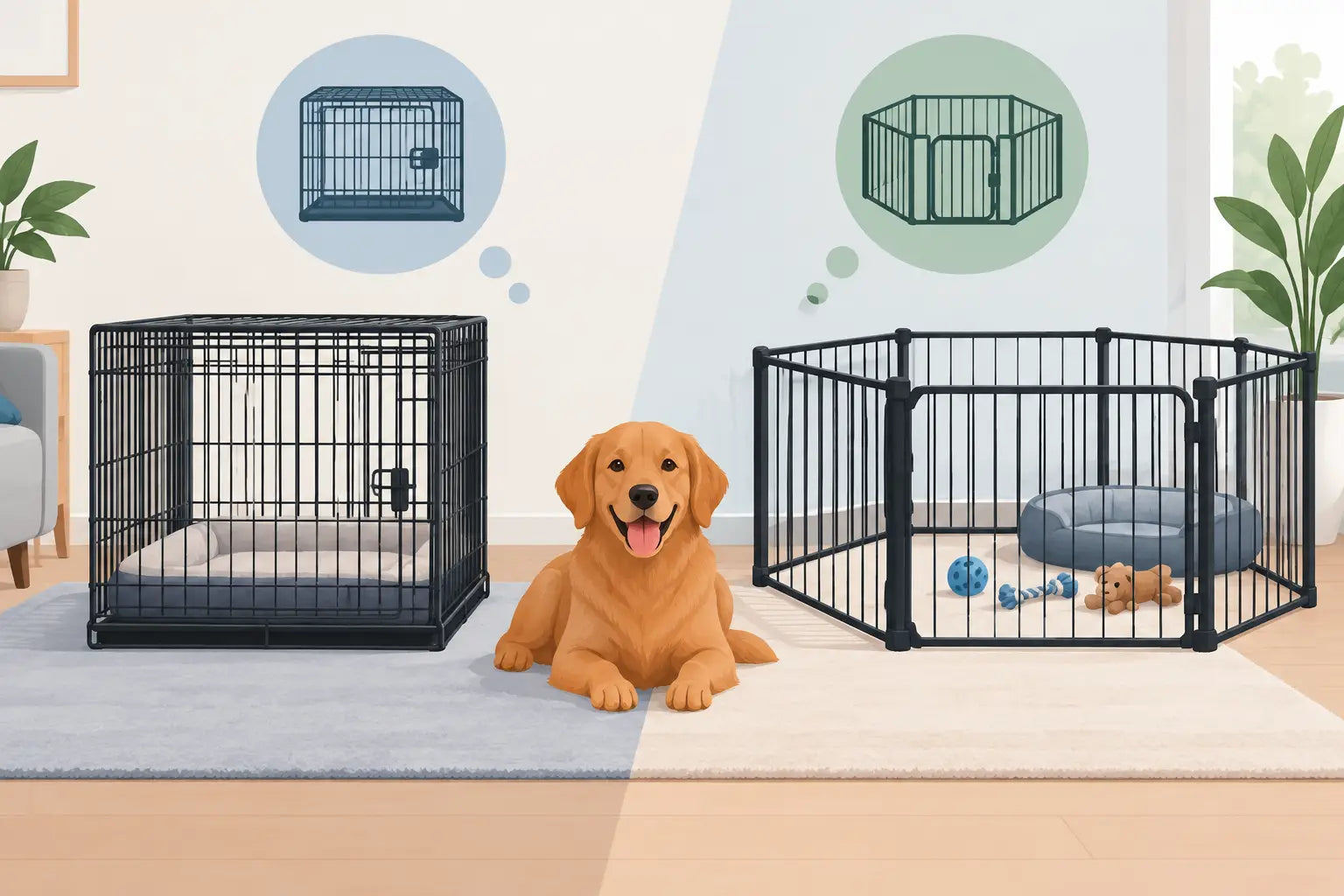
A new puppy can turn a quiet living room into a tiny, determined adventure zone in minutes. That is where the dog crate versus playpen decision becomes more than a shopping choice. Both give your dog a safe, comfortable place to settle, but they support different moments of everyday life.
A crate can become a cozy den for naps, bedtime, travel, and calm training. A playpen creates a larger contained area for supervised play, stretching, toys, and puppy-friendly independence. The best choice depends on your dog’s age, habits, energy level, and how you spend time together at home.
Dog Crate Versus Playpen: The Quick Difference
A dog crate is an enclosed, den-like space with a door. It is usually small enough that your dog can stand up, turn around, and lie down comfortably without having room to treat one end as a bathroom. Crates are especially useful for crate training, car travel, overnight sleep, vet recovery, and helping a dog relax when the household gets busy.
A playpen, sometimes called an exercise pen, uses connected panels to create a larger enclosed area. It gives a dog room for a bed, water bowl, toys, and movement. For puppies, it can also hold a designated potty area if you are using one during early training. Playpens are often a great fit for supervised daytime time at home.
Neither option is automatically better. Think of a crate as a personal bedroom and a playpen as a small, puppy-proofed room. Many pet parents find that having both makes daily routines easier.
When a Crate Is the Right Choice
A crate works best when your goal is rest, structure, or safe transport. Dogs are naturally drawn to quiet, enclosed resting spots when they have been introduced to them gently. With a soft bed or crate mat, a favorite chew, and positive associations, a crate can feel like a comforting retreat rather than a punishment.
Crates are especially helpful for house-training puppies. A properly sized crate encourages a puppy to hold it until the next scheduled potty break, which helps establish a reliable routine. The key word is properly sized. A crate that is too large may give your puppy enough room to sleep on one side and have an accident on the other.
For adult dogs, crates can still be useful long after the puppy stage. They provide a secure place during visitors, home repairs, holiday gatherings, or any moment when the front door may be opening often. They are also valuable for travel, whether your dog needs a familiar place in a hotel room or a secure carrier for a road trip.
That said, a crate is not a place for long, routine isolation. Puppies need frequent bathroom breaks, meals, play, and social connection. Adult dogs also need exercise, enrichment, and time with their people. A crate supports a healthy routine, but it should never replace one.
Choosing the right crate size
Your dog should be able to stand without crouching, turn around easily, and lie down in a natural position. For a growing puppy, a crate with a divider can be a practical choice. It lets you adjust the sleeping space as your puppy gets bigger instead of buying several crates.
Wire crates offer airflow and visibility, while plastic kennels can feel more enclosed and are often convenient for travel. Soft-sided crates can be cozy and lightweight for calm dogs, but they are not ideal for a puppy who chews, scratches, or is still learning boundaries.
When a Playpen Makes More Sense
A playpen shines when your dog needs room to be awake, active, and safely contained. It can give your puppy a place to play with toys while you answer emails, fold laundry, make dinner, or simply take a breath. You can set up a comfortable bed, fresh water, a chew toy, and a few rotating enrichment items without crowding the space.
This extra room can be especially helpful for young puppies that are not ready for free access to the home. Rather than following them from room to room and constantly saying “leave it,” you can create a safe area where the right things are available. That protects your shoes, cords, furniture, and puppy all at once.
Playpens can also work well for small adult dogs, senior dogs who need a calm recovery area, or dogs who get overwhelmed by a busy household. A pen near the family room can keep your pet included without putting them in the middle of every footstep and dropped snack.
The trade-off is that most playpens are not escape-proof for every dog. Athletic puppies may climb, determined dogs may push panels, and large breeds can outgrow a standard pen quickly. Always check the height, panel stability, and floor surface before leaving your dog inside. If your dog can jump or climb, use a secure cover designed for the pen or choose a safer setup.
Make the playpen feel like a good place to be
A playpen should be inviting, not bare. Add a washable bed or blanket, safe toys sized appropriately for your dog, and water in a bowl that is difficult to tip. If your puppy is teething, offer durable chew options and rotate them often to keep the space interesting.
Avoid leaving collars, harnesses, or dangling tags on a dog who will be unsupervised in a crate or pen. They can catch on wire or panels. It is also smart to remove anything your dog has a habit of shredding or swallowing.
Can You Use a Crate Inside a Playpen?
Absolutely. For many families, this is one of the most useful setups. Place the crate inside an attached or roomy playpen with the crate door open. Your puppy has a familiar sleeping area plus room to wake up, play, and stretch. Over time, they may choose the crate for naps on their own.
This arrangement can make the transition between active time and quiet time feel more natural. It also gives you flexibility. If your puppy needs a short, calm rest, close the crate door. If they are awake and ready for a toy break, open the crate and let them enjoy the pen.
Just keep the setup age-appropriate. A very young puppy still needs frequent potty trips outside, even if there is room in the pen. Indoor potty pads can be useful for some households, but they may slow outdoor house-training for puppies who begin to think all soft, absorbent surfaces are okay for bathroom breaks.
How to Help Your Dog Love Either Space
The goal is not simply to contain your dog. The goal is to help them feel safe, comfortable, and confident when they are in their own space. Start slowly and make the first experiences positive.
Toss a treat inside the crate or pen and let your dog walk in voluntarily. Serve meals nearby, then inside, if they are comfortable. Offer a favorite toy or safe chew during short sessions. Stay close at first, and build time gradually instead of shutting the door and walking away for a long stretch.
Never use the crate or playpen as a place for scolding. If your dog associates it with anger or being excluded, settling down will become harder. Calm praise, predictable routines, and comfortable bedding go much further.
Watch your dog’s behavior, too. Whining at first can be normal during adjustment, but frantic scratching, heavy drooling, repeated escape attempts, or panic are signs to slow down and reassess the setup. Some dogs need shorter sessions, more exercise before resting, or support from a qualified trainer.
What to Buy Based on Your Everyday Routine
Choose a crate if you need a secure sleep spot, a house-training tool, a travel option, or a quiet retreat during busy moments. Choose a playpen if you need a safe daytime zone where your dog can play and move around with a little more freedom.
If you are bringing home a puppy, planning for both can save stress later. A comfortable crate supports bedtime and calm breaks, while a sturdy playpen gives your new best friend a safe place to explore their toys and practice being independent. Add washable bedding, enrichment toys, bowls, and a leash nearby, and you have the beginnings of a routine that feels good for both of you.
Every dog deserves a space that says, “You belong here.” Whether that space is a cozy crate, a roomy playpen, or a thoughtful combination of both, the right setup helps make home feel safer, happier, and more yours, mine, and ours.

