

Cart
0
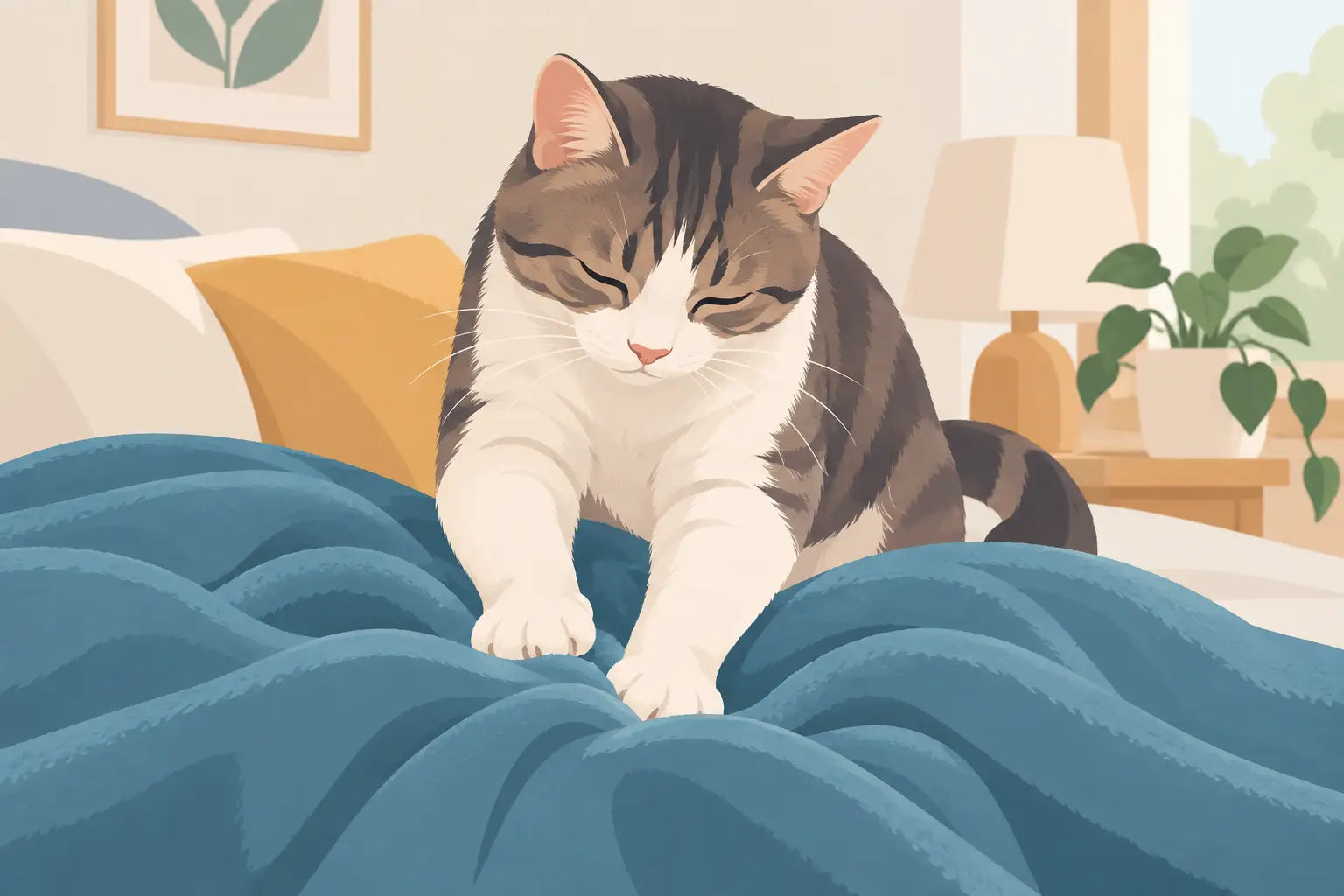
That little push-push-push with the paws can turn an ordinary throw blanket into your cat’s favorite place in the house. If you have ever wondered why cats knead blankets, the answer is usually a sweet one: they feel safe, content, and wonderfully at home. Often paired with purring, slow blinks, or a dreamy half-closed gaze, kneading is one of the clearest signs that your cat is settling into a moment of comfort.
For cats, a soft blanket is not just décor. It can become a familiar nap spot, a scent-filled security zone, and a cozy place to enjoy the same soothing behavior they practiced as kittens.
Why Cats Knead Blankets in the First Place
Kneading begins very early in life. Nursing kittens rhythmically press their front paws against their mother’s belly to encourage milk flow. The motion is useful at first, but many cats keep it long after they are grown. When an adult cat kneads a fuzzy blanket, a couch cushion, or your lap, they may be returning to a deeply familiar feeling of warmth, safety, and care.
That does not mean your cat sees you as their mother. It simply means the movement is comforting. Much like a person might fluff a pillow before bed or reach for a favorite sweatshirt on a hard day, a cat may knead when they are preparing to relax.
The texture matters, too. Plush fleece, sherpa-style fabric, knit throws, and soft pet beds can feel especially inviting because they give those paws something gentle to press and gather. A smooth, firm surface may not inspire the same enthusiasm. Every cat has preferences, so the blanket they choose can tell you a lot about what comfort feels like to them.
Kneading Can Also Be a Way to Claim a Favorite Spot
Cats have scent glands in the soft pads of their paws. As they knead, they may leave behind a subtle scent that helps make a space feel familiar and theirs. You will not notice it the way another cat might, but your cat knows exactly where they have been.
This is one reason cats often knead the same blanket, bed, or corner of the sofa repeatedly. The spot smells like home, feels good under their paws, and has become part of their routine. It is their personal little comfort station.
Cats also have a natural instinct to pat down a resting area. Their wild ancestors likely pressed down grass or leaves before curling up to sleep. Your indoor cat does not need to make a nest in the living room, of course, but that ancient behavior can still show up as a few contented paw presses before a nap.
Purring, Drooling, and Claws: What Those Extra Signs Mean
Kneading often comes with purring, and the combination is usually a sign of contentment. Your cat may look completely blissed out as they work their paws into a blanket, then curl into a tiny ball and fall asleep. That is the ideal cozy-cat moment.
Some cats drool while kneading. While it can surprise pet parents, a small amount of drooling during an especially relaxed kneading session is often harmless. It can be tied to the same kitten-like comfort response. If the drooling is new, heavy, frequent outside of relaxation, or accompanied by bad breath, pawing at the mouth, appetite changes, or discomfort, it is worth checking with your veterinarian.
Then there are the claws. Many cats extend and retract their claws while kneading because it is part of the natural movement. They are not trying to hurt you or ruin the blanket. Still, those tiny needle points can make lap kneading less adorable in a hurry.
A thick blanket between you and your cat can protect your legs while letting them keep their favorite ritual. Keeping claws trimmed can help, too. Avoid scolding your cat for kneading, especially when they are calm and affectionate. Redirect them gently to a soft blanket or pet bed if they choose a surface you would rather protect.
Is Blanket Kneading Ever a Sign of Stress?
Usually, no. A relaxed cat who kneads, purrs, and settles down is simply enjoying themselves. Kneading can even help a cat self-soothe after a busy day, a household change, or a little too much excitement from visitors.
It depends on the full picture, though. If kneading becomes intense and compulsive, or your cat is sucking, chewing, or swallowing fabric, pay closer attention. Fabric eating can create a serious intestinal blockage. Some cats are especially drawn to wool, fleece, strings, or loose-knit materials, so choose blankets that are in good condition and do not shed long fibers.
Call your veterinarian if you notice your cat repeatedly eating fabric, vomiting, hiding more than usual, losing weight, showing changes in litter box habits, or acting painful. The kneading itself may not be the problem, but a sudden behavior change deserves care.
How to Create a Better Kneading Spot for Your Cat
You do not need to transform your home to give your cat a space they love. Start with a comfortable, washable blanket in a quiet area where your cat already likes to rest. A bed near a sunny window, a cozy corner beside the family room, or a safe perch away from foot traffic can all become a favorite retreat.
Choose materials with comfort and safety in mind. Soft fleece and tightly woven plush fabrics are often great choices. Avoid blankets with dangling tassels, loose threads, beads, fragile decorations, or holes that can catch claws. If your cat likes to chew, opt for a durable pet blanket and inspect it regularly.
For multi-cat homes, more than one cozy spot can make a real difference. Cats may share a household, but they still appreciate having a place that feels distinctly their own. Offering a few beds, blankets, and elevated resting spaces can reduce competition and give every pet a chance to relax.
You can also make the space more appealing by placing it near familiar scents. A blanket your cat has already used is often more inviting than a brand-new one fresh from the package. Wash it when needed, but know that some cats may need a little time to warm up to a newly cleaned blanket that smells different.
When Your Cat Kneads You Instead of the Blanket
A cat who kneads your lap is giving you a pretty special vote of confidence. Your warmth, scent, and stillness make you feel safe. It can be a lovely bonding moment, even if you occasionally need an extra layer between those paws and your jeans.
Let your cat choose the interaction. Some cats want to knead for a minute and then settle beside you. Others want a full cuddle session with purring included. If you need to move them, slide a blanket under their paws or calmly encourage them toward their favorite bed rather than abruptly pushing them away.
At My Pet Your Pet Our Pet, we love the small rituals that make a house feel like home for every pet. A soft blanket, a supportive bed, and a quiet spot to rest can give your cat more than a place to nap. They give them a place to feel safe, loved, and completely theirs.
The next time those paws start their gentle rhythm, take it as your cat’s reminder to slow down. In their own wonderfully furry way, they are telling you that this moment feels just right.

