

Cart
0
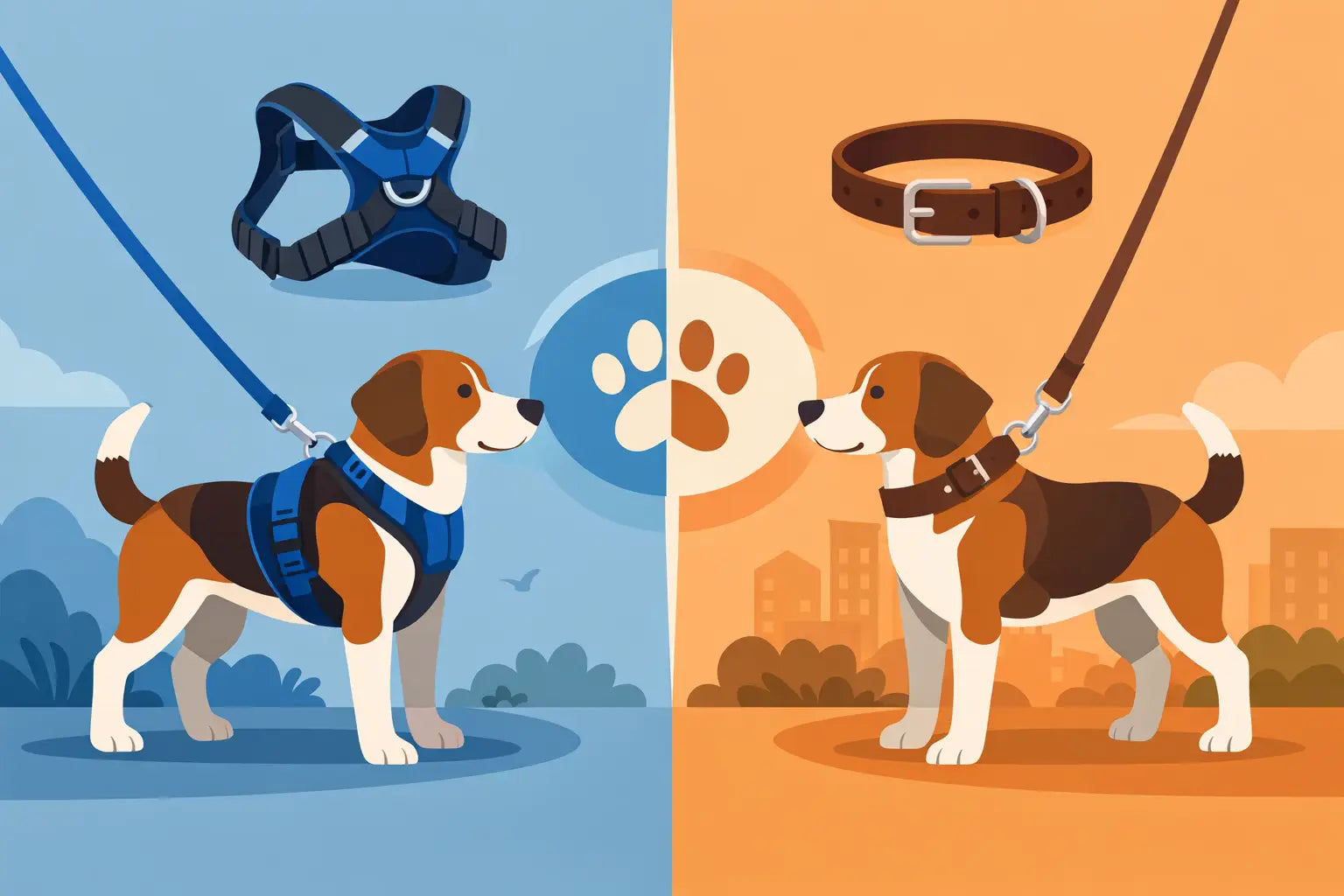
The moment your dog spots the leash, the excitement can go from happy wiggles to a full-body launch toward the door. That is when the dog harness vs collar question becomes more than a style choice. The right walking gear can make everyday outings more comfortable, safer, and much more enjoyable for both of you.
A collar is a familiar everyday essential, and many dogs wear one comfortably for identification. A harness spreads leash pressure across more of the body, which can be especially helpful for dogs that pull, have delicate necks, or are still learning their walking manners. Neither choice is automatically best for every pet. Your dog’s size, temperament, health, and walking habits all matter.
Dog Harness vs Collar: The Everyday Difference
A collar sits around your dog’s neck. It is lightweight, easy to put on, and an ideal place for ID tags. For relaxed dogs that walk beside you without pulling, a properly fitted collar and leash can be a simple, comfortable setup.
A harness wraps around the chest and torso, with a leash attachment point on the back, the front, or both. When a dog pulls, a harness distributes pressure over the chest and shoulders instead of concentrating it around the throat. This can give pet parents more control while reducing strain on the neck.
The biggest difference is not appearance. It is where the force goes when your dog reaches the end of the leash. A calm walker may do beautifully with either option. A determined squirrel chaser may be better supported by a secure harness.
When a Collar Makes Sense
Collars are practical for daily wear, quick potty breaks, and keeping your dog’s identification visible. Most dogs should have a comfortable collar with current ID tags, even if they wear a harness for walks. If your dog ever slips out through an open door or gets separated from you, those tags can make a stressful moment easier to resolve.
A collar may be a good choice for an adult dog that walks politely on a loose leash, does not cough or gag when excited, and has no neck or airway concerns. It can also be less bulky than a harness, which some dogs prefer around the house.
Still, a collar has limits. It is not designed to manage repeated hard pulling. If your dog lunges at bikes, pulls toward people, or strains against the leash, pressure at the neck can be uncomfortable and potentially unsafe. Small breeds, flat-faced dogs, puppies, and dogs with sensitive airways often need extra consideration here.
A collar should fit snugly enough that it cannot slide over your dog’s head, but not so tight that it rubs. As a simple fit check, you should usually be able to slide two fingers between the collar and your dog’s neck. Check the fit regularly, especially for growing puppies and dogs with thick seasonal coats.
When a Harness Is the Better Choice
For many families, a harness is the go-to accessory for neighborhood walks, park visits, and busy outings. It is especially useful for dogs that have not yet mastered loose-leash walking. Rather than putting their full pulling force against their throat, the harness supports them around the body.
Harnesses can also offer a more secure feel for energetic dogs. A well-fitted style with adjustable straps can help prevent backing out, though no product can replace close supervision and a proper fit. If your dog has a narrow chest, a deep chest, or a habit of wriggling free, take time to measure and adjust before heading out.
Front-clip harnesses are popular for pullers because the leash attachment at the chest can gently turn the dog back toward you when they surge ahead. Back-clip harnesses are often easy to use and comfortable for casual walkers, but they may not discourage pulling as effectively. Some harnesses include both attachment points, giving you flexibility as your dog learns.
A harness is also a smart option for dogs with tracheal sensitivity, neck injuries, or certain breathing challenges. If your pet has a medical condition, has shown signs of pain, or suddenly resists walks, check with your veterinarian before changing gear. The best accessory is one that supports your dog’s individual needs.
What About Puppies and Small Dogs?
Puppies are still learning what a leash feels like, and they are growing quickly. A lightweight, adjustable harness can be a gentle place to start, particularly for puppies that bounce, twist, and pull during early adventures. Pair it with short, positive walks and plenty of praise. Walking politely is a learned skill, not something most dogs know automatically.
For tiny dogs, a harness often provides better support than a leash clipped to a collar. Their necks are delicate, and even a little burst of excitement can create more force than you might expect. Look for soft materials, adjustable straps, and a fit that allows natural shoulder movement.
That said, small dogs should still wear an ID collar when appropriate. A harness may come off at home, while a lightweight collar can keep identification close by. Just make sure it is comfortable enough for everyday wear.
Choosing a Comfortable, Secure Fit
The best harness or collar is the one your dog can wear comfortably and safely. Price, color, and cute patterns are fun parts of shopping, but fit comes first. Measure your dog before ordering, then compare those measurements with the product’s size guide. Guessing based on breed alone can lead to loose straps, rubbing, or an awkward fit.
For a harness, check that the chest piece sits comfortably and does not press into the throat. The straps should be snug but not restrictive, and your dog should be able to walk, sit, and lie down naturally. Watch for chafing behind the front legs, especially after longer walks.
For a collar, look for signs that it is too tight or too loose. Hair loss, red skin, frequent scratching, coughing, or a collar that slips over the ears are all reasons to adjust the fit or try a different style. Inspect buckles, stitching, and leash clips regularly, especially if your dog loves muddy trails, beach days, or enthusiastic chewing.
Training Still Matters More Than the Gear
A harness can make pulling easier to manage, but it will not teach a dog to walk politely on its own. Likewise, a collar is not automatically uncomfortable when used with a relaxed leash. The most helpful walking tool is a combination of well-fitting gear, patient practice, and consistency.
Start by rewarding your dog for checking in with you and walking near your side. When the leash tightens, stop or calmly change direction instead of allowing your dog to drag you toward the exciting thing ahead. When the leash loosens, praise them and continue. Short, cheerful practice sessions often work better than one long, frustrating walk.
Bring high-value treats for busy places, and give your dog time to sniff. A walk is not only about distance. Sniffing, exploring, and moving at a comfortable pace can be wonderful enrichment for your best friend.
A Simple Choice for Happier Walks
Choose a collar for identification and easy everyday wear, especially if your dog is already a calm walker. Choose a harness for added comfort and control if your dog pulls, has a sensitive neck, or needs support while learning leash manners. Many pets benefit from having both, with each accessory serving its own purpose.
At My Pet Your Pet Our Pet, we believe the little essentials can make a big difference in your shared routine. Pick gear that fits your dog well, feels good on every adventure, and leaves more room for tail wags, fresh air, and time together.

