

Cart
0
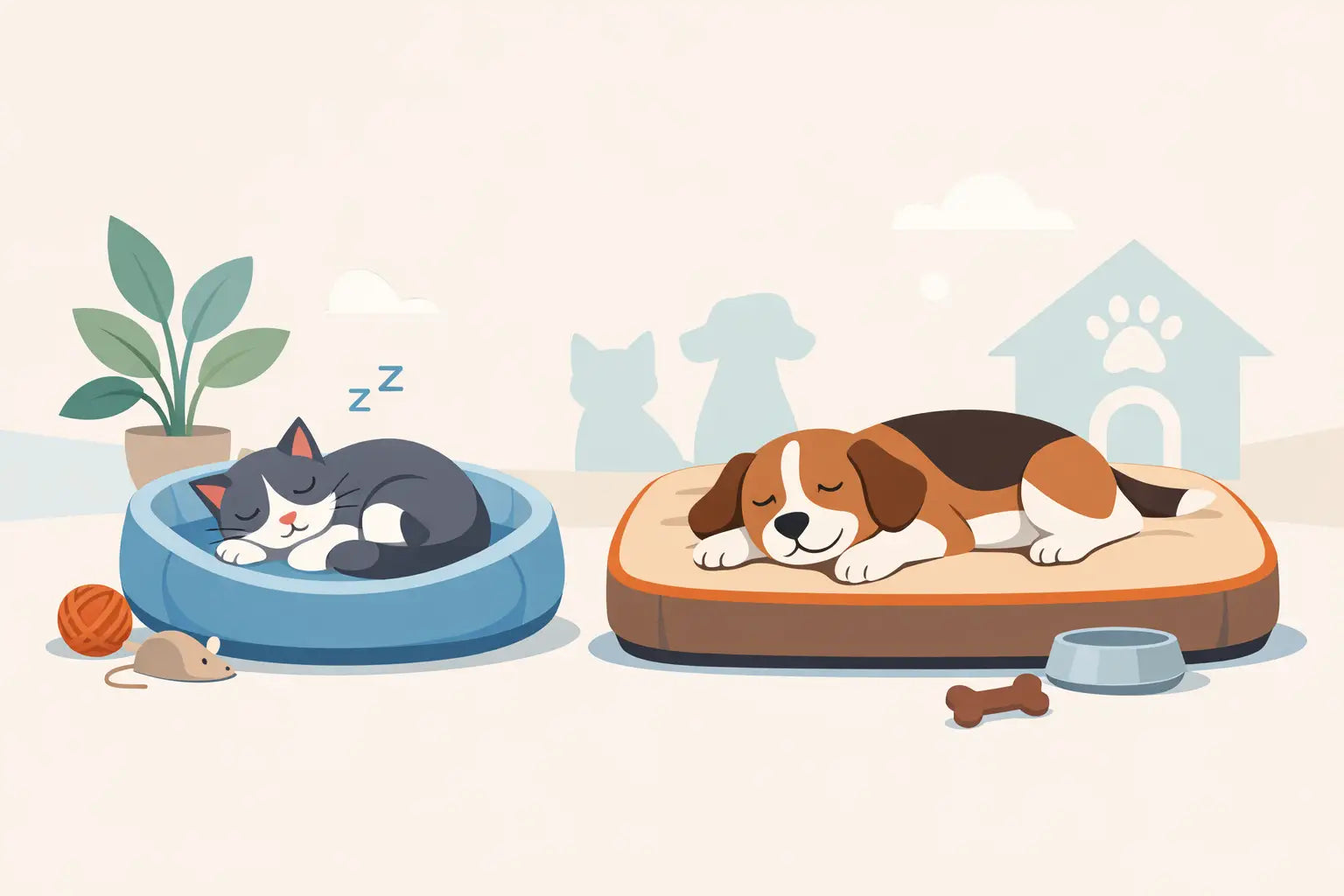
A bed that looks roomy online can feel surprisingly small once your dog claims it with all four paws out. And a plush cat bed may go unused if your cat cannot curl up along the raised edge they love. This pet bed size guide helps you choose a spot your companion will actually want to nap in - not just a cute accessory that sits in the corner.
The best fit is not only about your pet’s weight or breed. Their sleeping position, age, coat, mobility, and personality all matter. A tiny dog who sleeps stretched long may need more space than a heavier dog who curls into a tight ball. Your pet deserves a bed that feels safe, soft, and fully their own.
Start With Your Pet’s Sleeping Measurements
Measuring your pet while they are standing is a helpful starting point, but measuring how they sleep gives you the most useful answer. Watch them during a favorite nap. Do they curl into a little circle, stretch from nose to tail, sleep on their side, or sprawl belly-up across the floor?
For a curled-up sleeper, measure from the front of the chest to the base of the tail, then add 6 to 8 inches. That extra room lets them turn around and settle without hanging over the edge. For a pet who stretches out, measure from the nose to the base of the tail while they are lying down and add 8 to 12 inches.
When choosing a round or oval bed, compare your measurement to the bed’s interior diameter, not simply its outside width. Thick bolsters and raised walls can take up several inches of usable space. For rectangle beds, focus on the interior length and width where your pet will lie.
If your pet is between sizes, choosing the larger size is usually the kinder choice. The exception is a pet who loves a tucked-in, den-like feel. In that case, a slightly cozier bed with supportive sides may feel more comforting than a wide-open mattress.
Pet Bed Size Guide by Sleep Style
Curled-Up Cats and Dogs
Round, donut-style, and oval beds are made for pets who sleep with their paws tucked close and their tail wrapped around them. These styles offer a snug, nest-like feel and often have raised edges for chin support.
Small cats, kittens, Chihuahuas, Yorkies, and similar curled-up sleepers often do well in beds with an interior space around 18 to 22 inches across. Medium pets may prefer 24 to 30 inches. But do not choose by breed alone. A long-bodied cat or a fluffy dog can need more room than their size category suggests.
Stretchers and Side Sleepers
Pets who sleep on their side need a bed that is long enough for a fully relaxed body. A rectangular pillow bed, mat, or mattress-style bed is often a better match than a round bed with high sides.
Measure your pet from nose to tail base while they are stretched out, then add at least 8 inches. If they regularly rest their head beyond the bed’s edge, that is a sign the next size up would be more comfortable. Long-backed breeds, including Dachshunds and Corgis, especially benefit from checking the actual bed length instead of relying on a general small or medium label.
Sprawlers and Belly-Up Sleepers
Some pets want every inch of a bed - and then some. Belly-up sleepers and wide sprawlers usually enjoy a flat, generously sized bed that allows free movement and better airflow.
For these pets, it is better to prioritize floor space over raised sides. A bolstered bed can still work if the sleeping surface is large enough, but a large pillow bed may give them the freedom they prefer. If your pet changes positions throughout the night, size for their biggest stretch, not their smallest curl.
Burrowers and Nest Builders
Burrowing pets often love cave beds, hooded beds, and soft beds with deep walls. They may paw, circle, and rearrange blankets before getting comfortable. The bed still needs enough interior room for them to turn around, even if the entrance looks small.
Choose a burrow-style bed based on the inner sleeping area and opening height. A bed that is too tight can feel restrictive, while one that is oversized may not provide the cozy, sheltered feeling your pet seeks. Adding a familiar blanket can make a new bed feel even more inviting.
Use Weight Ranges as a Backup, Not the Main Rule
Many pet beds list recommended weight ranges. They are useful, especially when shopping for puppies, kittens, or a new rescue whose measurements you do not know yet. Still, weight does not tell the full story.
A 20-pound compact dog and a 20-pound long-legged dog do not take up the same amount of space. The same is true for cats: a 12-pound fluffy Maine Coon mix may need a much larger bed than a 12-pound shorthaired cat.
As a general shopping reference, small beds often suit pets up to about 15 pounds, medium beds may fit pets from 15 to 35 pounds, large beds commonly suit pets from 35 to 65 pounds, and extra-large options are made for bigger companions. Always check the listed dimensions before adding a bed to your cart. Brands can use different size labels, so one company’s medium may be another company’s large.
Consider Bed Shape, Walls, and Fill
The same exterior measurement can feel very different depending on a bed’s design. A 30-inch round bed with thick, high bolsters may have a sleeping surface closer to 22 inches. A 30-inch flat mat, on the other hand, offers nearly all 30 inches for lounging.
Raised sides are wonderful for pets who like to lean, curl, or rest their chin. They can also help create a sense of security. Flat beds are easier for older pets or those with stiff joints to step onto, especially when the entry edge is low.
Fill matters, too. A deeply stuffed bed can compress once your pet lies down, while a firmer orthopedic-style bed keeps its shape and provides more even support. For senior pets, large dogs, or pets who spend hours napping, look for a bed that is both spacious and supportive. A too-small bed can make getting comfortable harder; a bed that is too soft may not offer enough support.
Choosing a Bed for Puppies, Kittens, and Growing Pets
It is tempting to buy a giant bed for a growing puppy, but a very oversized bed can feel less secure for a young pet. A smaller cozy bed may help a puppy or kitten settle more easily during early routines.
If you expect quick growth, choose an affordable starter bed in their current size and plan to size up later. Another option is to select a medium bed with removable cushions or blankets that make the space feel cozier now. For crate use, choose a bed sized to the crate’s interior so your pet has enough room to lie down comfortably without losing all their open space.
Signs Your Pet’s Bed Is Too Small or Too Large
Your pet’s behavior offers useful clues. A bed may be too small if they regularly hang their head, paws, hips, or tail over the edge, circle repeatedly without settling, or choose the floor beside it instead. Some pets simply tolerate a small bed because it is familiar, so watch how relaxed their body looks once they lie down.
A bed may be too large when a small pet avoids it, only sleeps on one tiny portion, or keeps seeking tighter spaces like laundry baskets, blankets, or the back of the couch. This does not mean large beds are bad - it just means your pet may appreciate a smaller, more enclosed option as well.
For multi-pet homes, do not assume one large bed will replace separate sleeping spaces. Friends may cuddle sometimes, but many cats and dogs still want a bed they can claim as their own. A mix of sizes and styles lets every member of the family choose their favorite resting place.
Make the New Bed Easy to Love
Place the bed where your pet already relaxes. Cats may prefer a quiet sunny spot, a perch near family activity, or a calm corner away from a litter box. Dogs often like a bed near the people they love, whether that is beside the sofa, near your desk, or in the bedroom.
Give the bed a familiar scent by placing a clean blanket or favorite toy inside. Gentle encouragement works better than forcing the issue. Let your pet investigate, nap, and claim it at their own pace.
At My Pet Your Pet Our Pet, we believe comfort should feel personal. Measure your pet, think about the way they rest, and choose the bed that gives them room to dream, stretch, and feel completely at home.

