

Cart
0
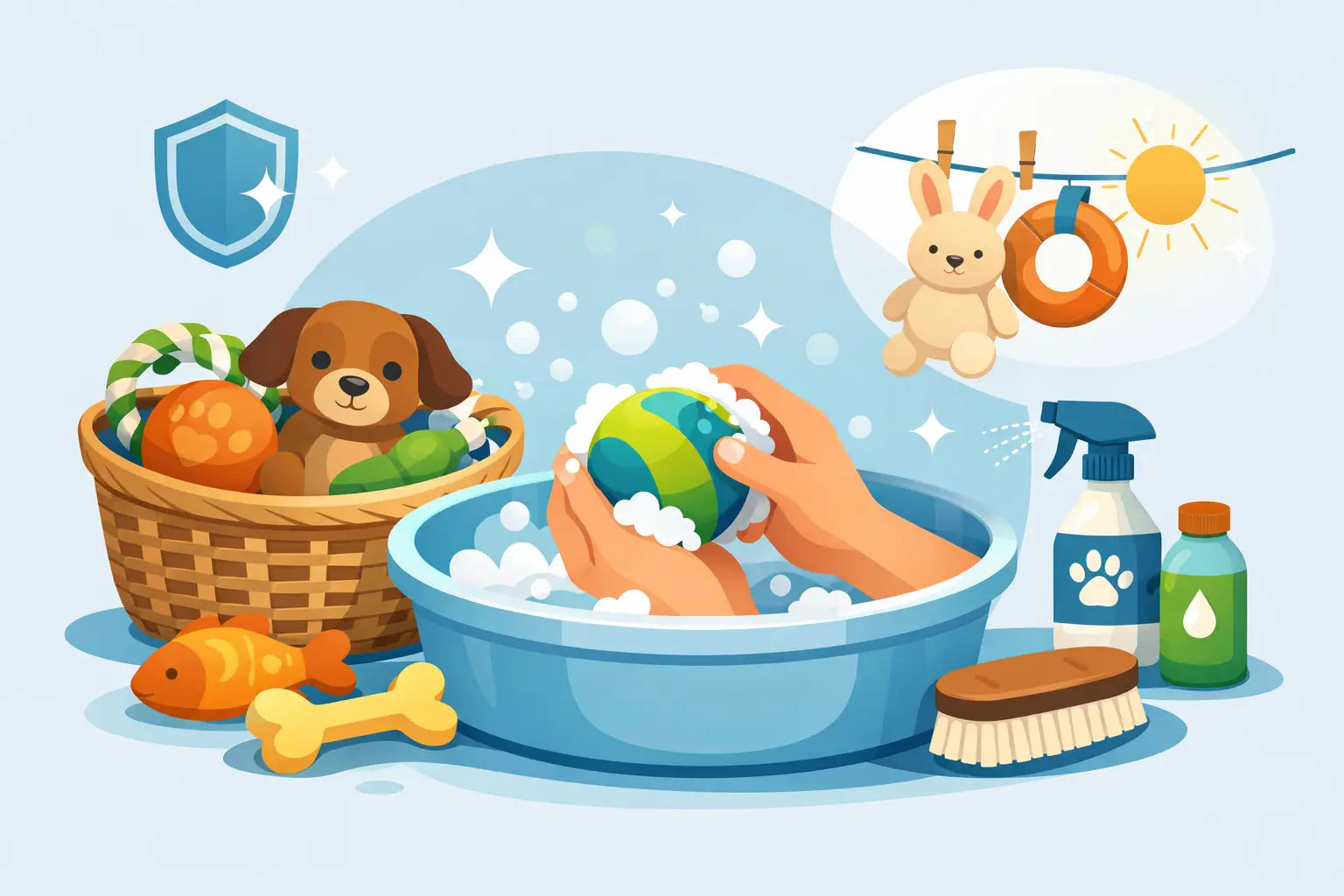
That favorite squeaky toy under the couch, the rope toy damp from an enthusiastic game of tug, the catnip mouse your cat carries everywhere - they collect more than happy memories. Learning how to clean pet toys helps remove dirt, saliva, loose fur, food residue, and odor without ruining the toys your pet loves most.
A clean toy box is a simple part of everyday pet care. It can also help you spot worn seams, cracked rubber, and loose pieces before playtime turns into a choking risk. The right cleaning method depends on what the toy is made from, so start by sorting toys into plush, rope, rubber, plastic, and electronic categories.
How to Clean Pet Toys by Material
Before washing anything, check the care label or original packaging if you still have it. Some toys are designed for a washing machine or dishwasher, while others need a gentle hand wash. When instructions are missing, choose the mildest method first.
Plush toys and stuffed animals
Soft toys hold onto saliva, fur, and everyday grime, especially if your dog uses one as a comfort toy or your cat likes to groom it. If the toy has no battery pack, sound chip, or glued-on parts, machine washing can be a practical option.
Place the toy inside a mesh laundry bag or pillowcase and wash it on a gentle cycle with cool or warm water. Use a small amount of fragrance-free, pet-safe detergent. Avoid fabric softener, strong scent boosters, and bleach, which can leave irritating residue behind.
Air-drying is the safest choice for plush toys. Lay them flat or hang them somewhere with good airflow until the inside is completely dry. A damp stuffed toy can develop mildew, so give it extra time before returning it to the toy basket. If the label allows tumble drying, use low heat only.
For a toy that cannot go in the washer, hand wash it with warm water and mild detergent. Rinse very thoroughly, press out water with a towel, and air-dry.
Rope and fabric tug toys
Rope toys can become surprisingly grimy because the fibers trap moisture and debris. Many cotton rope toys can be machine washed in a laundry bag on a gentle cycle. A hand wash works well, too: soak the rope in warm, soapy water, work the water through the fibers, then rinse until no suds remain.
Skip the microwave trick sometimes suggested for rope toys. Dry fibers and hidden synthetic threads can overheat or create a fire risk. Let the rope air-dry completely instead. Once a rope starts unraveling heavily or shedding long strands, it is time to replace it rather than keep washing it.
Rubber, silicone, and hard plastic toys
Treat dispensers, balls, chew toys, and many puzzle toys are usually the easiest to clean. Wash them with warm water, mild dish soap, and a dedicated brush that can reach grooves and treat compartments. Rinse well, because soapy residue can make a toy unappealing or upset a sensitive stomach.
Some sturdy rubber and plastic toys are top-rack dishwasher safe, but do not assume every toy can handle heat. High temperatures may warp plastic, weaken glued pieces, or change the texture of softer rubber. Check the manufacturer’s directions first. If there are deep scratches, cracks, or rough edges, replace the toy. Those small crevices can harbor buildup and may hurt your pet’s mouth.
Cat toys with feathers, catnip, or delicate parts
Cat toys often need a lighter touch. Feather wands, crinkle toys, and toys with bells or glued-on decorations should usually be wiped with a barely damp cloth rather than soaked. Keep the toy away from the wand handle or string connection if it could weaken the attachment.
For refillable catnip toys, empty out old catnip before washing when possible. Wash the fabric portion by hand, let it dry fully, then add fresh catnip. A toy that has become torn, lost feathers, or developed loose strings should be retired. Cats can be remarkably determined when a favorite toy starts coming apart.
Electronic and battery-operated toys
Never submerge electronic toys. Remove batteries if the design allows, then wipe the exterior with a lightly damp cloth and a tiny amount of mild soap. Use a clean, damp cloth to remove soap, then dry the surface immediately with a towel.
Keep water away from charging ports, switches, seams, and battery compartments. If a motorized toy is cracked, makes unusual noises, or has exposed wiring, stop using it. A replacement is much safer than trying to repair a toy that has been chewed or water-damaged.
A Simple, Pet-Safe Cleaning Routine
You do not need a complicated cleaning schedule to keep toys in good shape. Toys used every day, especially chew toys and food puzzles, benefit from a quick wash about once a week. Toys that touch wet food or treats should be washed after each use. Plush toys and less-used toys can often be cleaned every two to four weeks, unless they look dirty or smell off.
A quick toy check during your regular laundry or dishwashing routine makes the habit easier. Gather toys, sort them by material, wash what needs washing, and inspect each piece before putting it back. Rotating a few clean toys at a time also keeps playtime exciting without filling every room with clutter.
For multi-pet homes, cleaning matters even more. Sharing toys is part of the fun, but it also means saliva and germs travel from one pet to another. If one pet has been sick, has a mouth infection, or has parasites, wash shared toys more often and keep that pet’s toys separate until your veterinarian says normal play can resume.
What Not to Use on Pet Toys
Strong household cleaners may make a toy smell fresh to people, but pets experience the world nose-first and mouth-first. Avoid bleach, disinfecting wipes with harsh chemicals, heavily scented sprays, essential oils, and cleaners that are not meant for surfaces pets may lick or chew.
Vinegar is popular for household cleaning, but it is not necessary for routine toy washing and can leave a sharp scent some pets dislike. Warm water, mild soap, thorough rinsing, and complete drying are enough for most toys. If you are dealing with a serious contamination concern, such as a contagious illness in the home, ask your veterinarian for cleaning guidance tailored to the situation.
Know When a Toy Is Ready to Go
Cleaning extends the life of a good toy, but it cannot make a damaged toy safe again. Toss toys with exposed stuffing, loose squeakers, broken plastic, missing chunks, sharp edges, frayed rope strands, or parts that could fit entirely in your pet’s mouth. For powerful chewers, inspect toys every few days rather than waiting for laundry day.
It helps to keep a small backup supply, especially for comfort toys and enrichment favorites. A fresh ball, durable chew, cozy plush, or engaging cat toy can make replacement feel like a happy new discovery instead of a disappointing loss. At My Pet Your Pet Our Pet, every pet’s playtime deserves that little extra care.
Clean toys are one more way to say, “I love you,” in your pet’s language. A few minutes of washing, drying, and checking for wear keeps their favorite moments safer, fresher, and ready for the next tail wag, pounce, or zoom around the living room.

