

Cart
0
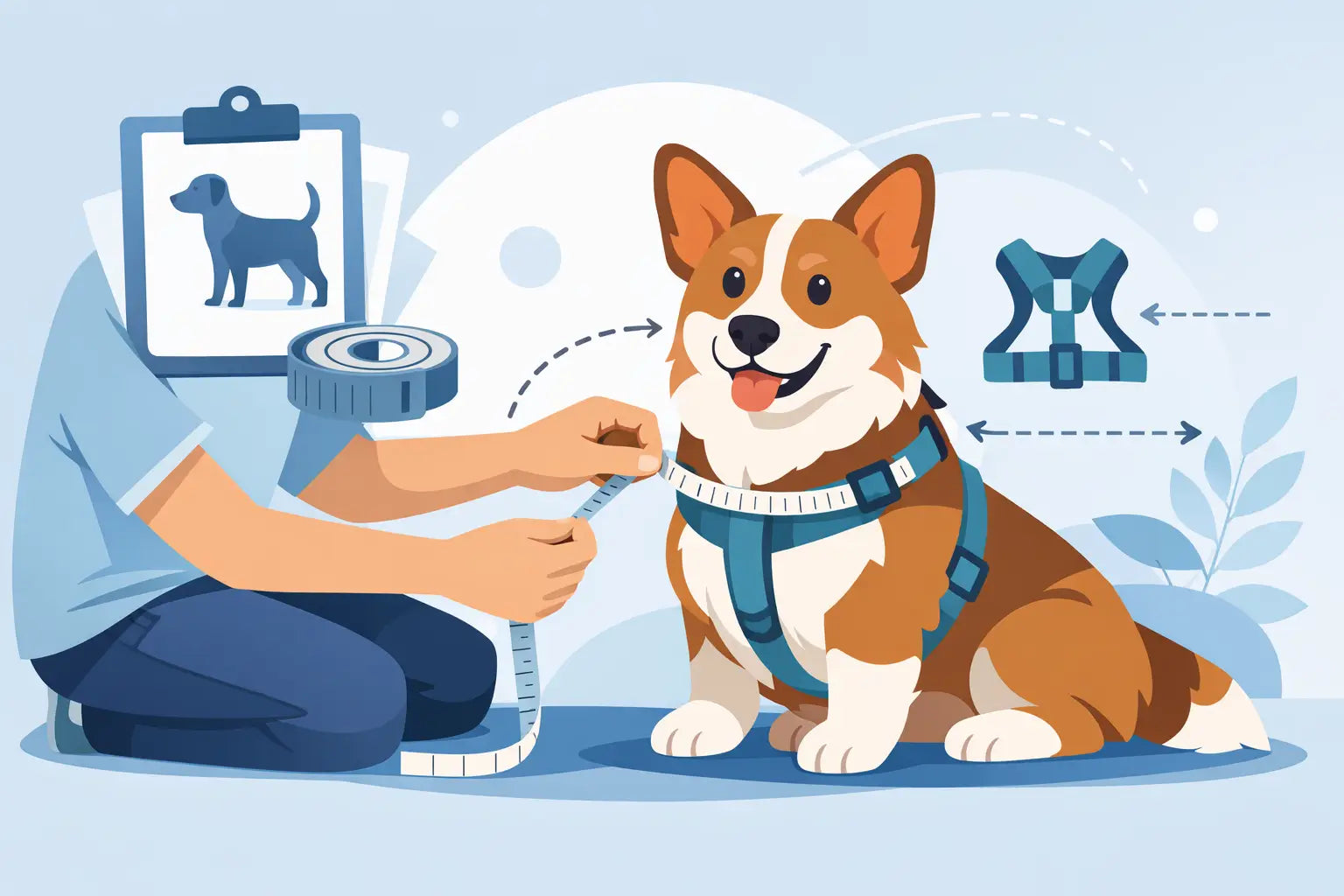
A harness that slides, pinches, or rubs can turn a favorite walk into a stop-and-start struggle. Learning how to measure dog for harness fit takes only a few minutes, but it can make a big difference in your pup’s comfort, confidence, and safety. Whether your dog is a tiny new puppy, a deep-chested adult, or a wonderfully wiggly rescue, a few accurate measurements help you choose a harness they will be happy to wear.
What You Need Before Measuring
Keep things simple. You will need a soft measuring tape, your dog’s current collar or a few treats, and a calm spot where they can stand naturally. A flexible sewing tape is best because it follows the shape of your dog’s body without pulling too tight.
No soft tape at home? Wrap a piece of string around the measurement area, mark where it meets, then lay it flat beside a ruler. Avoid using a stiff metal tape measure directly on your pet. It can be uncomfortable, especially for dogs who are nervous about handling.
Try measuring when your dog is relaxed but standing. Measurements taken while they are curled up, sitting, or stretching can be misleading. For enthusiastic pups, a second person can offer treats while you measure, making the whole process feel more like a little reward session than a chore.
How to Measure Dog for Harness Fit
Most harnesses use the chest girth as their main size measurement. Some styles also need the neck size and the lower chest or belly measurement. Always check the product’s individual sizing chart before ordering, since a medium in one design may fit very differently from a medium in another.
Measure the chest girth first
Chest girth is the circumference around the widest part of your dog’s rib cage. This is usually just behind the front legs, where the chest is broadest. Wrap the soft tape around this area, keeping it level and snug but not tight. Write down the number in inches.
This measurement matters most because it helps keep the harness from shifting or slipping off during walks. Dogs with barrel-shaped chests, such as Bulldogs, Pugs, and many mixed breeds, may fall into a larger harness size than their weight alone suggests. That is completely normal.
Measure around the neck
For a harness that goes over the head or has a chest yoke, measure the base of your dog’s neck. This is lower and wider than where a regular collar sits. Think of the spot where the neck meets the shoulders.
Do not measure high up under the jaw. A harness fitted there may feel restrictive and could rub as your dog moves. If your dog has lots of fluffy fur, gently press the tape through the coat so you are measuring their body rather than just the fluff.
Check the lower chest or belly area
Some vest, step-in, and full-body harnesses have a second strap that sits behind the front legs. Measure around your dog’s body at that point if the size chart requests it. This helps you check that the straps will land comfortably without pressing into the armpits.
The goal is a secure fit with room for a full, natural stride. If a harness strap sits too close to the front legs, it can cause chafing over time, even if the overall chest measurement seems right.
Use Measurements, Not Weight, to Choose a Size
Weight can be a helpful starting point, but it should never be the deciding factor. Two dogs can weigh 30 pounds and have completely different shapes. One may have a broad chest and short back, while another may be narrow, tall, and lean.
When your dog’s measurement falls between two sizes, the best choice depends on the harness and your pet’s build. An adjustable harness often gives you more flexibility, especially for dogs still growing, dogs with thick seasonal coats, or pups working toward a healthier weight. If the smaller size is close to being too tight, choosing the larger adjustable option is usually kinder and more comfortable.
Still, bigger is not always better. A loose harness can rotate around the body, let a dog back out, or cause rubbing from repeated movement. Look for designs with adjustable chest straps and clear fit guidance rather than relying on a size label alone.
Check the Fit Once the Harness Arrives
Measuring gets you close. Trying the harness on and checking it while your dog walks is what confirms you have found the right fit.
Start with the two-finger rule. You should be able to slide two fingers comfortably between the harness and your dog’s body at the neck and chest straps. If you can fit more than two fingers with lots of extra space, tighten the straps a little. If you cannot slide in two fingers, loosen the harness before your dog wears it outside.
Then watch how it sits. The chest piece should rest across the chest, not rise into the throat. The belly strap should sit a few finger-widths behind the front legs, leaving space to prevent underarm rubbing. On a properly fitted harness, your dog should be able to lower their head, sniff, trot, and sit without the straps digging in or shifting sideways.
A quick indoor test is useful before your first real walk. Let your dog wear the harness for a few minutes with treats and praise. Walk them around the room, ask for a sit, and let them turn around. This can reveal a strap that twists, a buckle that lands in an awkward spot, or a fit that looks good when standing still but moves too much in action.
Harness Styles Can Change What You Measure
Not every harness is built the same way, and that affects which measurements matter most. A step-in harness typically relies heavily on chest girth and may be easy for dogs who dislike gear going over their head. A vest harness can feel cozy and distribute pressure over a wider area, but it needs enough adjustment to avoid trapping heat or restricting movement.
Over-the-head harnesses are a popular everyday option for many dogs. For these, make sure the neck opening is large enough to pass comfortably over your dog’s head before adjusting the chest strap. If your pup has a broad head or short neck, compare both neck and chest measurements carefully.
Front-clip harnesses can be useful for dogs who pull, while back-clip styles are often simple for casual neighborhood walks. Neither style is automatically right for every dog. Your dog’s walking habits, body shape, comfort level, and training needs all play a part.
Common Measuring Mistakes to Avoid
The most common mistake is pulling the tape too tight. A snug measurement is accurate; a squeezed measurement can lead to a harness that feels uncomfortable from the first wear. Another frequent issue is measuring only the neck because it feels similar to sizing a collar. A harness is supported by the chest, so chest girth deserves the most attention.
It is also easy to forget that puppies change fast. Recheck measurements every few weeks during major growth stages, particularly if you notice the straps are at their loosest setting or your puppy seems less eager to wear the harness. Adult dogs may need a fresh measurement after a haircut, a seasonal coat change, or a change in weight.
Finally, do not ignore your dog’s behavior. Scratching at the harness once while getting used to it may be normal. Repeated freezing, rubbing against furniture, limping, or trying to escape the harness calls for a closer fit check. Comfort is part of safety.
Make Every Walk More Comfortable
A well-fitted harness gives your dog freedom to explore while helping you maintain gentle, secure control. At My Pet Your Pet Our Pet, we believe everyday essentials should support the happy moments that matter most: sniffing a new trail, greeting a neighbor, or heading out for that tail-wagging evening walk.
Measure with patience, adjust with care, and let your dog take a few easy steps before you head out. When the harness feels like a comfortable part of the routine, there is more room for what walks are really for: fresh air, shared time, and plenty of happy tails.

