

Cart
0
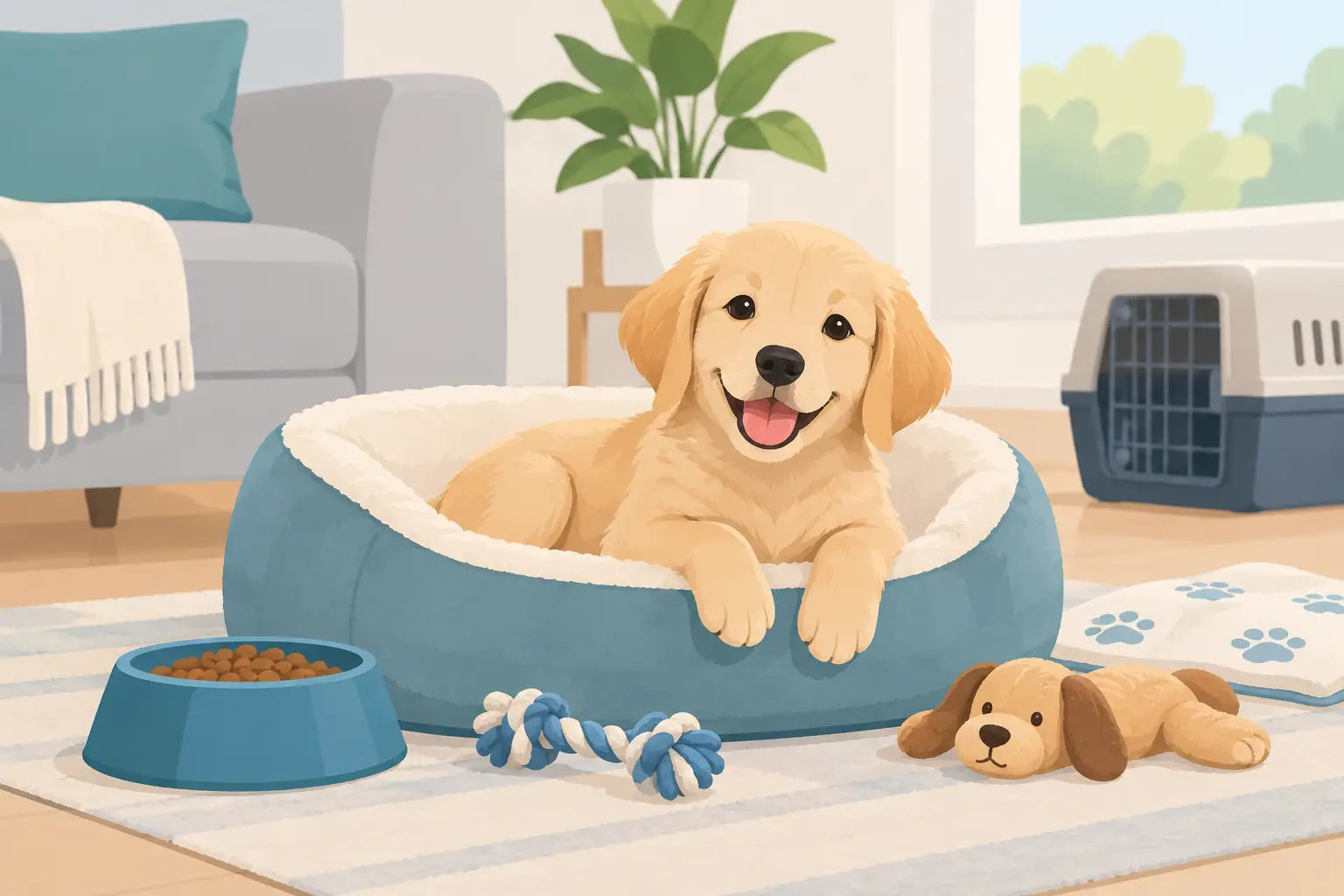
The first night with a puppy can feel a little like bringing home a tiny, adorable tornado. There are squeaky toys under the couch, surprise potty breaks, and one very curious nose investigating every corner. This puppy care guide keeps the early days simple: build a safe routine, offer plenty of patience, and make room for the joyful mess that comes with a new best friend.
Start With a Puppy-Ready Space
Before your puppy has full access to the house, create one cozy area that is easy to supervise. A comfortable bed or crate, fresh water, a few age-appropriate toys, and a washable feeding mat can turn one corner of your home into a calm little home base.
Puppies explore with their mouths, so puppy-proofing is more than a nice extra. Move shoes, cords, small toys, medications, cleaning supplies, and anything chewable out of reach. Check low tables and floor-level shelves from your puppy’s point of view. If it looks interesting, it probably is.
A crate can be helpful for rest, travel, and potty training, but it should never feel like a punishment. Choose a size that lets your puppy stand, turn around, and lie down comfortably. Add soft bedding only if your puppy will not chew or shred it. Some puppies do better with a simple crate setup at first, while others settle beautifully with a cozy blanket and a familiar toy.
Feeding Your Growing Puppy
Puppies need food made for their life stage because they are growing fast. Choose a quality puppy formula and follow the feeding guidance based on your puppy’s age, expected adult size, and activity level. Your veterinarian can help you decide on portions, especially for large-breed puppies or pups with sensitive stomachs.
Most young puppies eat several small meals a day rather than one large serving. Regular mealtimes also make potty training easier because you can start to predict when your puppy needs to go outside. Keep clean, fresh water available throughout the day, except when your vet recommends a different plan for a very young puppy.
Resist the urge to share every snack from your plate. Many common foods, including chocolate, grapes, raisins, onions, garlic, and xylitol-containing products, can be dangerous for dogs. Treats are wonderful for training, but they work best when they stay small and make up only a modest part of the day’s calories.
A Puppy Care Guide to Potty Training
Potty training is less about perfection and more about timing. Take your puppy outside after waking up, after meals, after play, and before bedtime. Young puppies have small bladders, so frequent trips are normal. The more chances your puppy has to succeed outside, the faster the routine begins to click.
Bring your puppy to the same outdoor spot when possible. Use a simple cue, wait quietly, then praise warmly and offer a small treat right after they finish. The reward needs to happen quickly so your puppy connects the happy moment with the right behavior.
Accidents are part of puppyhood. If you catch your pup in the act, calmly take them outside. Avoid scolding after you find a mess later, since puppies will not understand why you are upset. Clean indoor accidents thoroughly with an odor-removing cleaner, because lingering scent can invite a repeat visit.
Sleep, Play, and the Art of Settling Down
A puppy may look ready for adventure all day, but growing bodies need lots of sleep. Many puppies rest 18 to 20 hours across a full day. When a puppy gets overtired, they can become extra nippy, wild, or unable to focus. That is often a cue for a quiet break, not more excitement.
Set up a predictable rhythm of potty breaks, meals, gentle play, short training sessions, and naps. Puppies thrive when the day feels familiar. You do not need a minute-by-minute schedule, but consistency makes the household feel safer for your new companion.
Play should match your puppy’s size, age, and chewing style. Soft toys are great for carrying and cuddling, while durable chew toys can give teething mouths an appropriate outlet. Rotate a few toys instead of leaving every option out at once. A toy that disappears for a few days can feel brand new when it comes back.
Supervise play, especially when a toy has small parts, stuffing, loose threads, or pieces that could break off. If your puppy is an enthusiastic chewer, choose products designed for tougher chewing and replace damaged toys promptly.
Training Starts With Tiny Wins
Your puppy is learning from every interaction, whether you are holding a treat or not. Start with useful basics such as their name, coming when called, sitting, and walking beside you for a few steps. Keep sessions short, cheerful, and easy enough that your puppy can win often.
Positive reinforcement gives puppies a clear reason to repeat good choices. When your puppy sits instead of jumping, chews a toy instead of a table leg, or comes to you when called, reward it with praise, a treat, or a favorite game. The best reward depends on the puppy. Food motivates many pups, but some would rather chase a toy or receive happy attention.
Socialization matters too, but it should be thoughtful rather than overwhelming. Introduce your puppy gradually to household sounds, car rides, friendly people, different walking surfaces, grooming tools, and well-mannered vaccinated dogs. Let your puppy observe from a comfortable distance if they seem unsure. Confidence grows through positive experiences, not forced greetings.
Grooming Builds Trust
Even puppies with short coats benefit from gentle grooming practice. A few calm minutes with a soft brush teaches your pup that being handled can be pleasant. Touch their paws, ears, collar area, and mouth gently, then reward calm behavior. These small habits can make future nail trims, baths, and vet visits less stressful.
Baths should happen when your puppy truly needs one, not just because they found a muddy patch in the yard. Use dog-safe shampoo, keep the water comfortably warm, and dry your puppy well afterward. Between baths, regular brushing and a quick paw wipe after outdoor time can keep your pup fresh without drying out their skin.
A properly fitted collar or harness is another everyday essential. You should be able to slide two fingers beneath it, and you should check the fit often. Puppies grow quickly, so an accessory that fit last month may be too snug today.
Health and Safety Come First
Schedule a veterinary visit soon after bringing your puppy home, even if they seem perfectly healthy. Your vet can guide you through vaccinations, parasite prevention, feeding, microchipping, and the spay or neuter conversation. Keep a record of appointments and ask which public places are safe before your puppy has completed the recommended vaccine series.
Call your veterinarian if your puppy has repeated vomiting, diarrhea, extreme tiredness, trouble breathing, refuses food for an unusual amount of time, or seems painful. Puppies can become dehydrated quickly, so it is always better to ask when something feels off.
A secure leash, ID tag, and well-fitted harness help protect your puppy during every first walk. Keep outdoor sessions brief at the beginning, especially in hot weather or on rough pavement. Your puppy is still growing, and long forced exercise can be hard on developing joints. Gentle exploring and plenty of sniffing are often more valuable than trying to tire them out.
Make the Routine Feel Like Love
The best puppy supplies support the moments you will repeat every day: a bowl filled at breakfast, a favorite toy after a nap, a cozy bed at night, and a leash by the door for a little neighborhood adventure. At My Pet Your Pet Our Pet, those everyday essentials are part of making life happier for pets and the people who love them.
Your puppy will not remember whether the first week went exactly as planned. They will remember the feeling of being safe, fed, comforted, and welcomed into your family. Keep showing up with patience, a sense of humor, and a few treats in your pocket. That is how a house starts becoming your puppy’s favorite place in the world.

